Brian Grosberg is a world-renowned headache specialist who joins Peter to provide a master class on the diagnosis and treatment of headache disorders. In this episode, Brian explains the distinction between primary and secondary headaches and breaks down the defining features of the “big three” primary headache types (migraine, cluster, and tension headache)—highlighting how often they are misdiagnosed and how they are treated. He explores the epidemiology of headaches, describing migraine as an invisible disease affecting about 12% of the population, disproportionately affecting women, while cluster headaches more often affect men. He discusses the major gap between demand for headache care and available specialists, and he offers advice on when to see a physician. Brian dives into the multifactorial nature and pathophysiology of migraine, including genetic and hormonal influences, neurovascular changes, and inflammatory signaling, and connects these mechanisms to modern therapies. Throughout the conversation, he emphasizes the individualized nature of headache disorders and the importance of a detailed headache diary. Brian shares practical strategies for treating headaches including lifestyle changes, medications, and neuromodulation devices.
Subscribe on: APPLE PODCASTS | SPOTIFY | RSS | OVERCAST

“My mission for The Peter Attia Drive has always been to provide you with the most rigorous, evidence-informed insights on longevity. To do that without cluttering your experience with ads, we rely entirely on our premium members. If you’d like to support the work that makes this mission possible, consider becoming a premium member.”
– Peter
We discuss:
Timestamps: There are two sets of timestamps associated with the topic list below. The first is audio (A), and the second is video (V). If you are listening to this podcast with the audio player on this page or in your favorite podcast player, please refer to the audio timestamps. If you are watching the video version on this page or YouTube, please refer to the video timestamps.
- Brian’s interest in headaches and how Peter met Brian [A: 2:15, V: 0:00:11];
- Differentiating the types of headaches: primary versus secondary headache and tension versus migraine headache [A: 7:30, V: 0:07:30];
- The epidemiology and burden of migraine, its disproportionate affect on women, and the shortage of headache specialists [A: 20:00, V: 0:20:00];
- Genetic susceptibility to migraine and the role of hormones [A: 24:45, V: 0:25:45];
- Migraine triggers, the impact of hormones, and the importance of a headache diary [A: 31:15, V: 0:33:15];
- The phases of a migraine: premonitory symptoms, aura, the headache itself, and the postdrome [A: 38:15, V: 0:41:31];
- Tension headaches: symptoms, causes, and prevalence [A: 41:45, V: 0:45:23];
- Cluster headaches: extreme pain, distinctive symptoms, and frequent misdiagnosis as a sinus infection or allergies [A: 43:15, V: 0:47:11];
- Lifestyle interventions to prevent headaches [A: 51:15, V: 0:56:46];
- Pharmacological treatments to prevent headaches [A: 1:05:00, V: 1:12:00];
- What’s known about the pathophysiology of migraines: neurovascular changes, release of neuropeptides, and inflammatory response [A: 1:14:45, V: 1:23:12];
- CGRP antagonists for the treatment of migraines: large monoclonal antibodies and gepants [A: 1:20:15, V: 1:29:12];
- Use of calcium channel blockers and Botox to treat cluster headache and migraine [A: 1:28:30, V: 1:38:52];
- Drugs for the acute treatment of migraines [A: 1:32:30, V: 1:43:35];
- Treatment of migraines with electrical stimulation devices [A: 1:40:00, V: 1:52:13];
- Use of THC or cannabis to treat headaches [A: 1:44:00, V: 1:57:03];
- What Brian wants people to know about headaches [A: 1:45:45, V: 1:59:04];
- Brian’s advice on when to see a doctor about headaches and how to prepare for that visit [A: 1:49:15, V: 2:03:03]; and
- More.
Show Notes
Brian’s interest in headaches and how Peter met Brian [A: 2:15, V: 0:00:11];
- Peter didn’t realize until a few minutes ago that not only has Brian never been on a podcast, he’s never listened to a podcast (which is pretty unusual)
This topic affects so many people
- It’s important to understand that headache is one of the most common neurologic symptoms
- Nearly at some point in every person’s life, they’re going to experience a headache
- Surprisingly, in medical school, maybe medical students and residents get a few hours across entire medical school of lectures
- Peter doesn’t recall any of it
- That’s a gap in education
- Then in neurology residencies that is similar: neurology residents may only get a few hours of headache lectures or education and then they’re experts
Brian’s journey into headache medicine was actually by accident, complete serendipity
- A month into his first year of a neurology residency, he took care of a litigator who was out of work for 6 weeks due to a prolonged migraine that had been going on for 6 weeks straight
- The person who was caring for her would be Brian’s future mentor
- Brian saw the patient, took a history, read up on it, and then detailed the history to him
- This impressed him and Brian started seeing patients with him
- Residency at that time when you were on call, the hours weren’t restricted
- So if you were in the hospital 30 or 34 hours, whatever the case was, Brian would change out of scrubs into a shirt and tie, and then he would go see patients with him in the office, even though he’d already been in the hospital for that prolonged period of time
- So his training in headache medicine was very expedited during his residency
- From there, he finished his pursuit of advanced training in headache medicine
- There are just a limited number of programs in the country that are for fellowship training in headache medicine
Peter’s takeaway
- Basically during your residency you did a fellowship in headache medicine on your own time with the fellow who had become your mentor
- Then you went and did the formalized training
Going back to that first interaction with that first patient
- You must have had some intuition about this that allowed you to take a history that elicited enough information that this doctor felt like, wow, you’re a seasoned pro at this
- If Peter saw a patient with headaches, he doesn’t think he could ask 2 intelligent questions
- How long has it been aching and what part of your head?
- In reading up about it, Brian was able to obtain the features and characteristics, and what really struck him was the fact that she was so debilitated, she was coming to the hospital and receiving treatments, and leaving completely headache free
- That for him was an epiphany
- It led him to end up thinking that headache is an invisible disease that he wasn’t really getting a lot of education on during his neurology residency
- He started pursuing it and it led him into the field today
Peter and Brian cared for the same patient and met by email over 10 years ago
- Peter was taking care of a woman for whom headaches were a huge part of her life
- He was trying to focus on every aspect of her health during intake
- And he got the impression that this was a major issue for her
- He also gathered through that history that Brian personally was a major part of her care
- Now that is not normal in Peter’s practice because he’s not taking care of people that have debilitating neurologic disease
- So having a patient for whom a neurologist had a major impact in their life was just an interesting perk to Peter
- Peter has met so many amazing doctors this way
- Like a patient who has a debilitating orthopedic injury, that gets him down the rabbit hole of what’s going on
- In so many ways, Brian personally became the through line to understanding this patient’s migraine situation
- Obviously that’s turned out to be beneficial to Peter’s patients because now no matter where they are in the country, he says, “Well, you’re going to New York and ultimately Hartford,” (which is where Brian is now) because the only person Peter is going to send them to is Brian when it comes to headaches
Peter adds, “Thank you for that.”
{end of show notes preview}
Would you like access to extensive show notes and references for this podcast (and more)?
Check out this post to see an example of what the substantial show notes look like. Become a member today to get access.
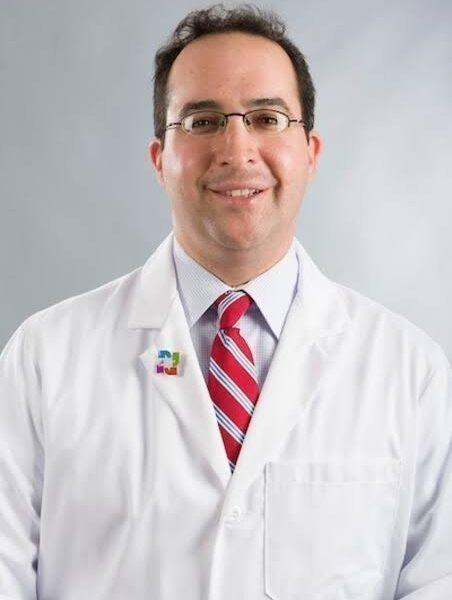
Brian Grosberg, M.D.
Brian Grosberg earned his medical degree at the SUNY Health Science Center at Syracuse. He completed a medical internship at Maimonides Medical Center in New York and his neurology residency and headache and facial pain fellowship at the Montefiore Headache Center and the Albert Einstein College of Medicine. He is board-certified in neurology by the American Board of Psychiatry and Neurology and board-certified in Headache Medicine by the United Council for Neurologic Subspecialties.
Dr. Grosberg is an internationally recognized headache specialist whose expertise attracts patients from around the world. He serves as the Director of the Hartford HealthCare Headache Program in Connecticut and as a Professor of Neurology at the University of Connecticut School of Medicine. Prior to this, he was Co-Director of the Montefiore Headache Center and Program Director of the Headache and Facial Pain Fellowship at the Montefiore Headache Center.
Dr. Grosberg has been the recipient of several prestigious awards for his work, including the Clinical Headache Fellowship Award from the American Headache Society, the Arnold P. Gold Foundation Gold DOC award, and the Members Choice Award for the Best Paper published in the journal Headache.
While Dr. Grosberg has extensive experience with clinical trials research, another primary academic area of interest is headache-related education. He has authored or co-authored more than 160 peer-reviewed publications, invited reviews, textbooks, book chapters, and abstracts. He was also an editor for the book Headache in the “Neurology in Practice” series. Dr. Grosberg is a Fellow of the American Headache Society and a member of the International Headache Society and the American Academy of Neurology. For the American Headache Society, he was the past chair of the Refractory Headache section and serves on the Practice Management Committee and the special interest sections for procedural headache medicine, academic affairs, headache classification, inpatient headache, and women’s issues. He is also an invited reviewer for the journals Headache and Cephalalgia. [Hartford HealthCare]