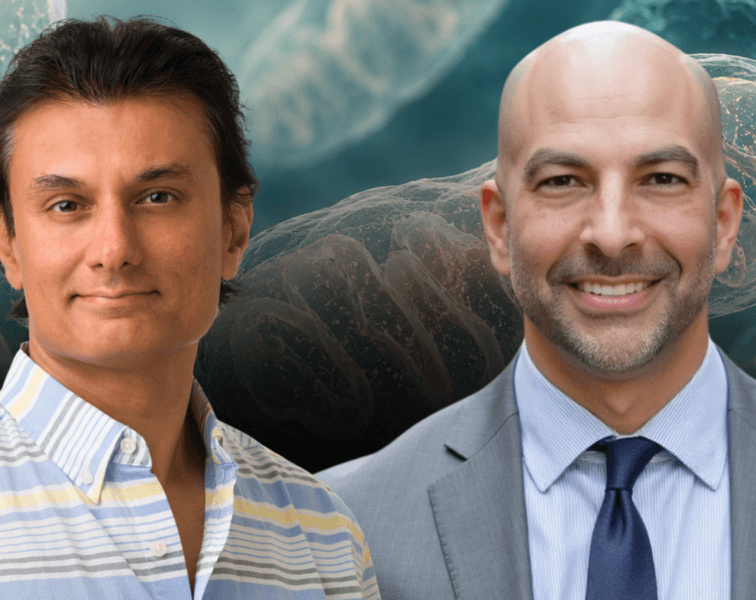
In this episode, Peter sits down with Dr. Kathryn (Katie) Gray, a physician-scientist, high-risk obstetrician, and maternal-fetal medicine specialist at the University of Washington School of Medicine. Katie begins by explaining the remarkable physiologic changes that occur during pregnancy and how the cardiovascular, metabolic, and hormonal systems adapt to support both mother and developing fetus. From there, the conversation turns to some of the most important complications that can arise. Katie explains how gestational diabetes is screened for and treated, and what a diagnosis may mean for the long-term health of both mother and child. She then walks through the biology of preeclampsia, including who is at risk and how the condition is managed. She also discusses HELLP syndrome and postpartum depression. Peter and Katie explore the realities of labor and delivery, including breech presentation, the role of midwives, and the trade-offs between vaginal and cesarean delivery. The conversation also covers stillbirth and the growing role of cell-free DNA in prenatal genetic screening. Other topics include prenatal nutrition and folate, breastfeeding, and exercise during pregnancy. Throughout the episode, Peter and Katie return to a larger question: What can pregnancy reveal about a woman’s long-term health? They discuss how complications during pregnancy can provide important clues about future health risks. Finally, Katie highlights some of the major questions that remain unanswered in maternal health and why greater investment in research is needed to improve outcomes for mothers and their children.
Disclaimer: The views expressed on this podcast are solely those of Dr. Kathryn Gray and do not represent the University of Washington or any of its affiliated units. Dr. Gray speaks solely in a personal capacity, and nothing here should be construed as an official position or endorsement from the University of Washington.
Subscribe on: APPLE PODCASTS | SPOTIFY | RSS | OVERCAST

“My mission for The Peter Attia Drive has always been to provide you with the most rigorous, evidence-informed insights on longevity. To do that without cluttering your experience with ads, we rely entirely on our premium members. If you’d like to support the work that makes this mission possible, consider becoming a premium member.”
– Peter
We discuss:
Timestamps: There are two sets of timestamps associated with the topic list below. The first is audio (A), and the second is video (V). If you are listening to this podcast with the audio player on this page or in your favorite podcast player, please refer to the audio timestamps. If you are watching the video version on this page or YouTube, please refer to the video timestamps.
- What drew Katie to obstetrics and gynecology, and fundamental questions in the field that remain unanswered [A: 3:15, V: 0:11];
- Pregnancy as a cardiovascular and metabolic stress test; the first symptoms and early changes [A: 6:30, V: 3:43];
- Early hormonal changes, prenatal nutrition, and neural tube defects [A: 16:00, V: 14:07];
- Fetal development and the physiology of gestational diabetes [A: 23:45, V: 22:21];
- Diagnosing and treating gestational diabetes [A: 30:00, V: 28:29];
- Preeclampsia: diagnosis, biology, acute risk, and how it’s managed [A: 37:00, V: 36:19];
- HELLP syndrome, what genetic studies reveal about preeclampsia, and the antihypertensive medications used to treat it [A: 49:00, V: 48:53];
- What pregnancy reveals about long-term cardiometabolic health [A: 54:45, V: 55:07];
- Cesarean delivery, breech presentation, and stillbirth [A: 1:01:15, V: 1:01:50];
- The onset of labor, cervical dilation, and membrane rupture [A: 1:14:15, V: 1:16:08];
- Vaginal delivery and breastfeeding: benefits versus myths [A: 1:23:15, V: 1:25:28];
- Exercise during pregnancy, sleep position in the third trimester, and postpartum depression [A: 1:27:00, V: 1:29:37];
- Prenatal genetic screening: the growing role of cell-free DNA and the gap between what is technologically possible and what gets deployed in the clinic [A: 1:33:00, V: 1:36:15];
- Midwifery and the realities of childbirth [A: 1:39:00, V: 1:42:43];
- Maternal health in the United States and the need for research investment [A: 1:48:30, V: 1:52:41]; and
- More.
Show Notes
What drew Katie to obstetrics and gynecology, and fundamental questions in the field that remain unanswered [A: 3:15, V: 0:11];
You’re a physician-scientist (an MD PhD), what led you to the field of obstetrics and gynecology?
- As an undergraduate at the University of Wisconsin, Katie planned to attend medical school until an adviser introduced her to combined MD-PhD training
- Katie’s PhD was technically in immunology, it focused on the molecular mechanism of a novel benzodiazepine identified in a drug screen that treated autoimmune lupus disease in mice
- It induced apoptosis in cells
- She isolated mitochondria from cow hearts and used biochemical assays to show that the compound acted on the mitochondrial ATPase
- The original compound was not sufficiently soluble for easy absorption, but a derivative entered trials for inflammatory bowel disease because it could act locally in the gut
- Katie was drawn to obstetrics and gynecology by her interest in women’s health, her enjoyment of both medicine and surgery, and the distinctive motivation she saw among pregnant patients
- Katie shares, “It was such a unique patient population to take care of because I found people were uniquely motivated about their health during that time in a way that you didn’t find in other parts of medicine.”
- She was also fascinated that we didn’t understand many fundamental questions:
- Why do people go into labor?
- Why do people have preterm labor?
- Why do people have preeclampsia?
Pregnancy as a cardiovascular and metabolic stress test; the first symptoms and early changes [A: 6:30, V: 3:43];
Understanding the physiologic stress test that is pregnancy
- Peter watched his wife go through 3 successful pregnancies
- He’s seen the most extreme sides of it
- There is part of him that thinks, “How did our species propagate?”
- He doesn’t understand how all women and children didn’t just die
- Infant and maternal mortality was a huge driver of short life expectancy prior to modern medicine
Talk through the unbelievable demands that are placed on women during pregnancy
- Katie is likewise amazed that pregnancy goes well as often as it does
- The body begins adapting immediately after pregnancy starts to support the developing fetus
- Blood volume expands substantially
- Endocrine function and metabolism change dramatically throughout pregnancy
“[Pregnancy] It’s a cardiovascular stress test because the plasma volume expands so much. It is a metabolic stress test because there’s increased insulin resistance.”‒ Katie Gray
- Particularly in the second half of pregnancy, insulin resistance increases
- In some patients, this adaptive change progresses to gestational diabetes
- The physiologic stress of pregnancy can reveal a predisposition to future disease
- Peter wants to talk about all of those, starting at the beginning
Shortly after conception, what is the first physiologic interruption that occurs in the woman’s body?
{end of show notes preview}
Would you like access to extensive show notes and references for this podcast (and more)?
Check out this post to see an example of what the substantial show notes look like. Become a member today to get access.

Kathryn Gray, M.D., Ph.D.
Kathryn (Katie) Gray earned her undergraduate degree from the University of Wisconsin-Madison before moving to the University of Michigan where she earned both her MD and PhD. She completed her residency in gynecology-obstetrics at Emory University Medical Center then a fellowship in maternal-fetal medicine at Brighman and Women’s Hospital. She is triple-board certified in obstetrics and gynecology, clinical genetics, and also maternal and fetal medicine.
Dr. Gray is a physician-scientist who specializes in the treatment of high-risk pregnancies and reproductive genetics. She is an Associate Professor of Obstetrics & Gynecology, Division Chief of Maternal-Fetal Medicine, and Director of Research of Maternal-Fetal Medicine at the University of Washington. She is passionate about optimizing medical care of pregnant people and advancing research to understand the etiology of adverse pregnancy outcomes. Her research focuses on the genetics of adverse pregnancy outcomes (including preeclampsia, stillbirth, and fetal anomalies), advancing prenatal genetic screening and diagnosis, and medication use in pregnancy. [UW Medicine]
LinkedIn: Kathryn Gray