In this episode, Peter sits down with Dr. Linus Abrams, a psychiatrist with nearly 35 years of clinical experience specializing in mood disorders and psychopharmacology, to explore how our understanding of mental health is evolving beyond the traditional neurotransmitter model. After decades in practice, Linus began questioning many of the assumptions underlying modern psychiatry, leading him to investigate how hormones, metabolism, inflammation, circadian biology, and the endocrine system shape mood and cognition. Together, Peter and Linus examine why psychiatric care should aim not only to reduce symptoms but also to restore the full human experience. They discuss how psychiatric medications work, where they fall short, and why distinguishing bipolar disorder from unipolar depression is essential for effective treatment. The conversation also explores the growing mental health burden of social isolation associated with digital devices and social media, along with the biological factors—nutrition, exercise, sleep, and chronic stress—that influence resilience and distress tolerance. Linus explains the powerful roles of estrogen, progesterone, testosterone, and thyroid hormone in regulating mood and cognition across the lifespan. Finally, Peter and Linus review the promise and limitations of ketamine and psychedelic therapies, and why the future of psychiatry may lie in integrating neuroscience, endocrinology, and whole-body physiology to better understand, diagnose, and treat mental illness.
Subscribe on: APPLE PODCASTS | SPOTIFY | RSS | OVERCAST

“My mission for The Peter Attia Drive has always been to provide you with the most rigorous, evidence-informed insights on longevity. To do that without cluttering your experience with ads, we rely entirely on our premium members. If you’d like to support the work that makes this mission possible, consider becoming a premium member.”
– Peter
We discuss:
Timestamps: There are two sets of timestamps associated with the topic list below. The first is audio (A), and the second is video (V). If you are listening to this podcast with the audio player on this page or in your favorite podcast player, please refer to the audio timestamps. If you are watching the video version on this page or YouTube, please refer to the video timestamps.
- Linus’s passion for understanding his patients and going beyond traditional psychiatry [A: 2:45, V: 00:11];
- A short primer on the different classes of drugs used in psychiatry [A: 12:45, V: 10:24];
- Evaluation of a patient with bipolar disorder [A: 26:00, V: 24:12];
- An evolutionary perspective on depression [A: 33:30, V: 32:00];
- Changes in the modern world triggering mental health problems [A: 41:00, V: 39:41];
- An evolutionary perspective on insomnia [A: 48:15, V: 47:15];
- Peter’s window analogy to understand distress tolerance and irritability [A: 49:45, V: 48:54];
- The impact of foundational biological factors on psychiatry: nutrition, exercise, sleep, and endocrinology [A: 52:30, V: 51:46];
- The effect of estradiol on neurotransmitters in the brain [A: 58:15, V: 57:54];
- Options for increasing testosterone in men, and why clomiphene is inferior to exogenous testosterone [A: 1:11:00, V: 1:11:05];
- The rapid drop in progesterone is linked to both premenstrual dysphoric disorder (PMDD) and postpartum depression [A: 1:14:30, V: 1:14:37];
- Treatment of postpartum depression [A: 1:18:00, V: 1:18:18];
- Hypothyroidism presenting as depression: how Linus makes the diagnosis and what he uses for treatment [A: 1:26:00, V: 1:26:53];
- The link between hyperarousal and chronically elevated cortisol [A: 1:39:30, V: 1:40:47];
- A case where the menopause transition uncovers bipolar disorder [A: 1:44:15, V: 1:45:52];
- Ketamine as a tool to treat recalcitrant depression, and concerns about its recreational use [A: 1:49:15, V: 1:50:58];
- Case study: an Alzheimer’s patient who improved after psilocybin, and why Linus is cautious about drawing conclusions from it [A: 1:55:15, V: 1:57:07];
- Peter’s experience with psychedelics, and the myth that estrogen is bad for men [A: 2:00:30, V: 2:02:37];
- The therapeutic potential of psychedelics in psychiatry [A: 2:11:00, V: 2:13:36]; and
- More.
Show Notes
Linus’s passion for understanding his patients and going beyond traditional psychiatry [A: 2:45, V: 00:11];
- Linus has a very unique perspective on the integration of all of the traditional tools and insights of psychiatry, along with those of endocrinology
Is that a relatively recent fascination for you?
- Yes
- He has been in practice for almost 35 years
- He was in a bit of a rut; he was enjoying his practice, but felt that he wasn’t learning as much as he wanted to learn
- There are a number of factors that drove him in this direction
- But the pivot is quite recent, and he is still learning about endocrinology
- It’s been a recently evolving trend, but he’s thought about it deeply
During the first 30 years of your practice, (A) what did you love, what gave you satisfaction, and (B) and what did you question or feel was insufficient to help your patients?
- Linus sees himself as a kind of humanistic, existential-oriented psychiatrist who happens to be practicing psychopharmacology as a way to make a living and having an expertise in bipolar spectrum disorders
- But he found that psychopharmacology was perceived ambivalently, for the most part
- Even in very successful cases from an objective point of view in terms of symptom reduction
- That the patient felt it was undesirable, even if they had a spectacular reduction in symptoms
- And it led him to think about what was contributing to that
“What I finally decided was the organizing principle was that psychiatry aims at reduction of symptoms, but not restoration of the full human experience that makes life most worthwhile.”‒ Linus Abrams
If you were at a dinner with 9 other psychiatrists, would they share that view as well? Is that a largely uncommonly held view amongst your peers?
- Probably not, but Linus doesn’t go around asking that question
- It is an important question
- He would say that his peers would agree that there’s an unusual amount of struggle, even in cases where there’s a dramatic improvement
- Where people come with horrible levels of suffering, and a psychopharmacologic intervention results in a dramatic reduction of that suffering
- That it’s often still a struggle to encourage a patient to continue with an ongoing regimen when it’s needed
- And there are certain conditions that require chronic treatment—bipolar disorder is chief among them
Linus doesn’t want to undersell psychopharmacology
- He feels blessed to have had such a wonderful career and experience of psychiatry
- He loves the field of psychiatry, and he doesn’t mean to criticize psychiatry per se
This is more about adding an additional lens of perspective than detracting anything in any way from psychiatry, because psychiatry is a remarkable field
To the question of what’s been fulfilling
- He was lucky to have made the choice to become a psychiatrist and take advantage of the wonderful opportunities to get to know human beings on a deeper level
- That’s been probably the most fulfilling aspect of his career—to really get to know people in depth who are remarkable human beings
- And that’s what inspired him to go into psychiatry in the first place
- Because understanding the patient is always greater than his ability (or any provider’s ability) to understand them
- Because the nature of a human being is so unique and remarkable
It’s progressive layers of insight and progressive attempts to understand and reinterpret our misinterpretations
One of the things about psychiatry that is quite unique to medicine is the lack of measurable biomarkers or objective findings that could be measured on imaging
- When you think through presumably the spectrum of conditions that a psychiatrist would be treating, from anxiety to depression to hypomania, bipolar disorder, all of these things, there’s nothing that’s going to show up on a CT scan or an MRI of the brain that makes that diagnosis
- There isn’t a blood-based biomarker that’s going to say, “Oh, this person has high ferritin, or, low this or low that.”
- Peter points out that Linus said something a moment ago that rings very important
- Even though he used the term psychopharmacologist several times
- Implying that the main tool he uses is a pharmacologic tool
- The human story piece of it is the diagnosis
Peter thinks Linus has to have a very good hypothesis based on his subjective interaction with the patient
- Yes and no
- First, he does a lot of psychotherapy too
- He’s one of those rare people (in a self-directed way) who chose a residency program at Harvard that trained both psychotherapy and psychopharmacology
- And he did that quite intentionally because he wanted to have a lot of cases where he was doing both as opposed to dividing and partitioning a patient’s care
- Because that led to his curiosity and the psychotherapeutic aspect of it
- Peter knows from other friends who have done psychiatry residencies at Harvard, that Harvard is unique in that it still preserves that legacy of…
- Harvard is a very heterogeneous institution, and it really depends on which particular hospital, which training program, because there are a number of different training programs (even within psychiatry)
Getting to the other aspects of Peter’s question, diagnosis and psychopharmacology don’t always go that hand in hand
- One would think that they would, but not necessarily
There’s a certain art of psychopharmacology that’s somewhat intuitive and somewhat evidence-based
- Linus finds that part interesting
- And all the information that one gets from a trial of a psychotropic medication is useful information
- It isn’t categorical—this is a good drug for this or a bad drug
- But an adverse response gives us potentially actionable information going forward and should be part of the record permanently to advise any future physician about how to best help that individual
{end of show notes preview}
Would you like access to extensive show notes and references for this podcast (and more)?
Check out this post to see an example of what the substantial show notes look like. Become a member today to get access.
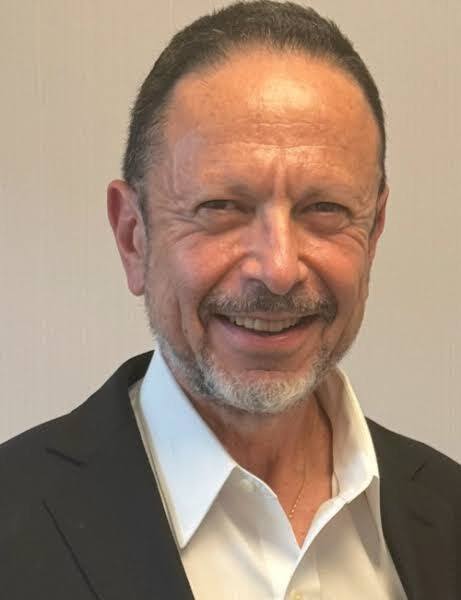
Linus Abrams, M.D.
Linus Abrams earned a Bachelor of Arts at Columbia College in Philosophy and Pre-Med. He earned his medical degree at New York Medical College then completed a fellowship in Psychiatry at Harvard Medical School. He is board certified by The American Board of Psychiatry and Neurology. Further, he has completed advanced training in both bioidentical hormone replacement therapy (BHRT) and conventional hormone replacement therapy (HRT). Dr. Abrams maintains a private psychiatry practice in Greenwich, Connecticut, integrating neuroendocrinology and psychology, with expertise in how hormonal factors affect mood and cognition. He previously served as the Director of the Department of Psychiatry at Greenwich Hospital-Yale New Haven Health from 2007-2013. Prior to that he was the Assistant Unit Chief of the Anxiety and Mood Disorders Unit at the New York Hospital Weill Cornell Medical Center-Westchester Division. [Hormone Informed PsychiatryTM]
LinkedIn: Dr. Linus Abrams
Website: Hormone Informed PsychiatryTM