Layne Norton is a nutrition scientist and accomplished power athlete,who returns to The Drive for a conversation that departs from the show’s usual format. In this episode, Layne presents the evidence-based case that seed oils are not uniquely harmful under isocaloric conditions, while Peter steelmans the strongest versions of the opposing argument that seed oils are inherently harmful. They examine how scientific bias and evidence are evaluated, revisit the historical randomized controlled trials that shaped the seed oil controversy, and explore the mechanistic biology underlying LDL oxidation and atherosclerosis. Along the way, Layne unpacks the chemistry and processing of modern seed oils, assesses evolutionary and ancestral nutrition arguments, clarifies the relationship between seed oils, ultra-processed foods, and contemporary dietary patterns, and situates these questions within the larger context of lifestyle factors that drive cardiometabolic health. Layne concludes by offering practical considerations around dietary fats, cooking oils, and real-world food choices.
Subscribe on: APPLE PODCASTS | SPOTIFY | RSS | OVERCAST

“My mission for The Peter Attia Drive has always been to provide you with the most rigorous, evidence-informed insights on longevity. To do that without cluttering your experience with ads, we rely entirely on our premium members. If you’d like to support the work that makes this mission possible, consider becoming a premium member.”
– Peter
We discuss:
Timestamps: There are two sets of timestamps associated with the topic list below. The first is audio (A), and the second is video (V). If you are listening to this podcast with the audio player on this page or in your favorite podcast player, please refer to the audio timestamps. If you are watching the video version on this page or YouTube, please refer to the video timestamps.
- The idea behind this episode, biases, and evidence-based thinking [A: 5:15, V: 0:11];
- The four core arguments behind claims that seed oils are harmful [A: 12:30, V: 8:49];
- The Minnesota Coronary Experiment (MCE) [A: 14:30, V: 11:00];
- The differences among saturated, monounsaturated, polyunsaturated, and trans fats, and why those differences matter for cardiovascular disease [A: 18:30, V: 15:45];
- Missing trans fat data as a confounder in the Minnesota Coronary Experiment, other limitations of that study, and the challenge detecting meaningful differences in hard outcomes through nutrition research [A: 24:00, V: 22:01];
- The Sydney Diet Heart Study (SDHS): an attempt to address the “duration problem” by enrolling a much higher-risk population [A: 28:30, V: 26:53];
- Debating whether evidence from randomized trials supports the idea that seed oils are uniquely harmful once major confounders are removed [A: 34:00, V: 33:38];
- The Rose Corn Oil trial: an often-cited study used to argue against polyunsaturated fats [A: 36:30, V: 36:44];
- Three studies where replacing saturated fat with polyunsaturated fat produced different results than earlier trials [A: 41:30, V: 42:37];
- Layne’s explanation for why the evidence is pointing towards cardiovascular risk reduction when substituting polyunsaturated fat for saturated fat [A: 47:30, V: 49:39];
- What Mendelian randomization says about the causal role of LDL cholesterol in ASCVD [A: 56:45, V: 1:00:34];
- The compounding effects of life-long exposure to high LDL cholesterol [A: 1:06:45, V: 1:12:09];
- Does the linoleic acid (omega-6) content of seed oils cause inflammation? [A: 1:13:45, V: 1:20:49];
- Does the linoleic acid (omega-6) content of seed oils increase oxidized LDL? [A: 1:19:30, V: 1:27:50];
- Layne’s analogy to explain why lower LDL particle number outweighs higher per-particle oxidation risk when comparing polyunsaturated fats to saturated fats [A: 1:26:15, V: 1:36:05];
- The role of oxidized LDL in CVD: exploring differences in a diet high in polyunsaturated fat (seed oils) versus high in saturated fat [A: 1:28:00, V: 1:38:22];
- Examining whether industrial processing and solvent extraction of seed oils—especially residual hexane—could plausibly cause long-term harm [A: 1:34:00, V: 1:45:37];
- The evolutionary and “ancestral diet” argument against seed oils [A: 1:40:45, V: 1:53:55];
- Weighing concerns about industrial processing of seed oils against the totality of metabolic and cardiovascular evidence [A: 1:47:30, V: 2:02:15];
- Practical considerations around dietary fats, cooking oils, and real-world food choices [A: 1:50:00, V: 2:05:17];
- Comparing the health impact of seed oils with that of caloric intake and activity levels, and how to prioritize interventions [A: 2:00:15, V: 2:18:26];
- More.
Show Notes
The idea behind this episode, biases, and evidence-based thinking [A: 5:15, V: 0:11]
- This is a different type of episode
- Originally we were planning to do this as our inaugural debate series
- People have heard Peter talk a little bit about how he desired to do a debate series, which was to have two people on who had opposing views on a topic
- But he’s been very vocal of his criticism of debates on podcasts in that he could charitably call them useless
- Which is to say anybody can sort of say anything
- And in real time, it’s almost impossible to verify what people are saying
- It’s not to say that people are necessarily lying
- It’s that people are maybe taking liberal interpretations or not interpreting things the same way, and it would be much more valuable if everybody could be looking at the same thing
- The idea was we were going to have 2 people that were going to pre-submit all of their evidence to Peter and the entire research team, and everybody was going to agree upfront what the papers were
- What the questions were that we were asking, what the data were
- And during the process of the debate, people could only reference things that were pre-submitted
- In other words, we’re going to make it feel a lot like a courtroom
- Peter says that through the lens of, we have a process in court where you have discovery and the opposing lawyers have to submit everything
- Peter’s role was really to play judge, not jury
- The public, the people listening to this would be the jury ‒ they would ultimately be the ones that would decide
- And the first topic we were going to focus on was the one we are going to talk about today: seed oils
- How long did we spend on this? About 9 months, over a year maybe
- Layne was identified as the person who would speak to the argument that seed oils are not uniquely harmful
- We identified another individual who seemed incredibly qualified to speak to the other side of this debate, which is to say that seed oils do pose a unique nutritional risk
- And for reasons Peter honestly doesn’t even remember, that individual at some point just decided they didn’t want to do it
- There was some concern that Peter’s personal view leaned more towards the side that seed oils are probably not that harmful
- Peter is always pretty vocal about his biases and was very vocal about stating, “I don’t really see something here guys.”
- But he was also clear to point out that he’s simply the judge and not the jury, and ultimately the jury decides, and they’re going to also decide if he can be a fair judge
- This is still a topic we care about, so we thought we would do it anyway
- However, we are going to do this a little differently than a normal podcast
- Instead of just a regular interview, Peter is actually going to make his best attempt to steelman the case for the other guest who is not here
- In the process of the year spent together, Peter did come to better understand the arguments for why a person would think seed oils are uniquely harmful as a class of fatty acids
With all of that said, would you like to add anything before we jump into this?
Layne points out, “When speaking to bias, I think it’s important to point out that everyone has bias.”
- Everyone has personal beliefs they developed, and that is just a human characteristic
- There’s no way to get rid of that
- Layne has his own personal beliefs
- But Layne is very upfront about his biases
- If we’re on a topic where he has a different opinion than perhaps the consensus of the literature or some other experts who he considers to be good evidence-based experts, he will say, “Hey, look, this could be my bias showing here,” or, “I have a bias towards this. I understand what this literature says. Here’s why I think that maybe it doesn’t capture it all right now.”
- And I think that that’s about as best as you can do
- One of the things Layne told a friend the other day was, “People think that funding or money is by far the biggest driver of people essentially not sticking with the evidence.”
- In some cases that’s true
Layne thinks that personal beliefs are actually just as powerful, if not a more powerful reason why people stray from the evidence
- Look at how many people spend hours online arguing over politics that get zero money from arguing about politics
In the current day and age with social media, with clickbait, things are very information siloed and there can be a lot of talking past each other
Layne shares his goal, “I hope today what we can do is present this evidence, and I will acknowledge where I think that there is something really there and then I will also explain why I think overall my view is accurate and in line with the best data available.”
- To be clear, if anybody has a bias against seed oils, it probably should be Layne
- He came from a lab that was very much in line with the lower carb way of thinking of:
- Maybe saturated fat isn’t as bad as we thought
- Maybe LDL doesn’t matter
- When he got into graduate school in 2004, that was a pretty popular idea
- Maybe it’s not just saturated fat, LDL, maybe it’s the particle size, the oxidation status, the LDL to HDL ratio
Layne admits, “I said those things for a long time and eventually changed my mind with the evidence.”
Layne discloses his research funding
- He got money from the National Dairy Council, the National Cattlemen’s Beef Association and the Egg Board
- He’s painting with a broad brush, but he would say most of the very, very rigorous anti-seed oil people tend to err on the side of either low-carb, animal-based, or carnivore
And if anybody has a bias towards high quality animal protein, it’s Layne
- He thinks a lot of people, when the research conflicts with whatever their viewpoint is, they immediately jump to funding source or think that there’s something nefarious going on
“What I will say is, the scientific method is perfect. It is a perfect method, but it is done by people who are not.”‒ Layne Norton
Judging the strength of evidence
- The scientific method is a perfect method, but it is done by people who are not [perfect]
- That is why it is so important to look at the overall consensus of the evidence and looking at the different converging lines of evidence
- Which is something Layne will talk about a lot today
There are a lot of converging lines of evidence here, and that can give us a relatively strong or weak amount of confidence in how accurate something is or a statement is
- Layne also points out that when you’re looking through scientific research or you’re scrolling social media, if you have a bias towards something, you can always find a study or phrase something in a way that supports whatever you wish to be true
- That is why it’s important that people (like Peter and himself) try to cut through that noise for other people who aren’t equipped to read research
The four core arguments behind claims that seed oils are harmful [A: 12:30, V: 8:49]
The 4 main arguments Peter has heard for why seed oils should be viewed as potentially harmful
- We’re going to talk through these, not necessarily in the order that Peter is going to introduce them here
- 1 – Mortality literature on some of the large RCTs (2 in particular)
- In other words, when we go back and look at the literature, particularly in the era when people began to appreciate that saturated fat raised cholesterol
- At the time it was total cholesterol, eventually when it got fractionated, it became another subset of that called LDL cholesterol
- We saw the association between LDL cholesterol and ASCVD
- The question became, “Hey, can we substitute something else for saturated fat (think margarine versus butter) to lower cholesterol?”
- So a couple of these studies were done and these studies, while lowering cholesterol, did not lower mortality (we’re going to talk about that)
- In other words, when we go back and look at the literature, particularly in the era when people began to appreciate that saturated fat raised cholesterol
- 2 – We’re then going to get into some really mechanistic stuff and talk about LDL through the lens of oxidation
- Layne alluded to this a little bit with his change in thinking around LDL particle size, but this goes kind of a step further than just particle size
- And we get into the really granular biochemistry of what is happening to an LDL particle that renders it pathologic versus maybe not so much
- 3 – We’re then going to talk a little bit about not just the seed oil per se, but the industrialization of how a seed oil is refined
- In other words, is there something about the process of making a seed oil commercially that introduces something that’s harmful as a byproduct?
- 4 – …
{end of show notes preview}
Would you like access to extensive show notes and references for this podcast (and more)?
Check out this post to see an example of what the substantial show notes look like. Become a member today to get access.
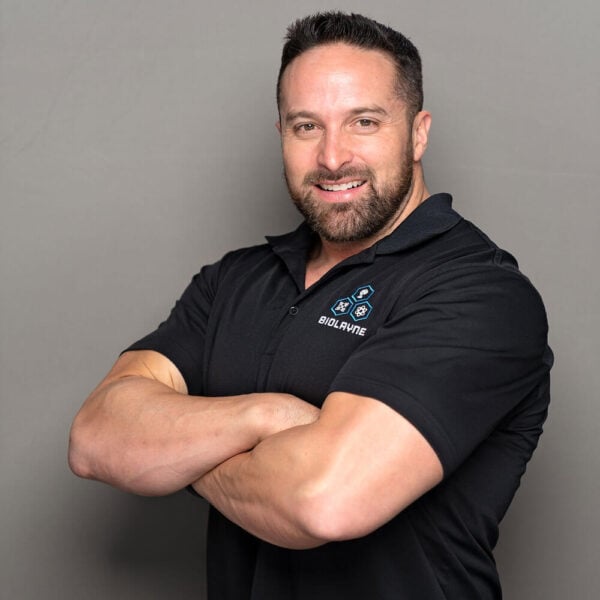
Layne Norton, Ph.D.
Layne Norton earned his B.S. in Biochemistry at Eckerd College and a Ph.D. in Nutritional Sciences at the University of Illinois working with Dr. Donald Layman. Layne founded BioLayne to provide science-based coaching. He is a natural pro bodybuilder, professional powerlifter, and a physique coach. He has won numerous bodybuilding and powerlifting competitions and currently holds the world record for the IPF 93 kg class squat (303 kg, 668 lbs). Layne finished 1st at the 2022 IPF World Masters Powerlifting Championships in a drug-free tested division. He is the co-author of several books, including Fat Loss Forever: How to Lose Fat and KEEP It Off, as well as several research publications. [BioLayne.com]
Website: Biolayne
Podcast: Physique Science Radio
X: @BioLayne
Facebook: Layne Norton
Instagram: @Biolayne