Lloyd B. Klickstein is a physician-scientist who has spent more than 20 years at the intersection of drug discovery, healthy aging, and preventive medicine. Drawing on his experience in academic medicine, translational research, and biotechnology, Lloyd walks through the full arc of modern drug development. He explains how scientists identify an unmet medical need and decide which diseases and therapeutic targets are worth pursuing. From there, he takes us through the process of engineering a drug, testing it in animals, and navigating clinical trials and regulatory approval. Using bimagrumab as a case study, Lloyd explains the rationale for targeting myostatin and activin signaling to increase muscle mass and strength and describes how the antibody was engineered and screened. He then walks through what was learned from early clinical trials. Unexpected effects on fat mass and type 2 diabetes helped reshape bimagrumab’s development as a potential treatment for obesity, including its use in combination with semaglutide. Along the way, Peter and Lloyd explore the differences among drug modalities, including biologics and small-molecule therapeutics. They discuss the roles of patents and capital allocation in drug development, along with the requirements for IND submission and GMP manufacturing. They also examine why developing a new drug takes so long and costs so much, and why identifying failures early is critical. At the end of the episode, the conversation turns to mTOR inhibition and geroprotection, as well as Lloyd’s current work on a novel pharmacologic approach to cancer prevention. This episode provides a rare behind-the-scenes look at how new medicines are actually created and the scientific, regulatory, and economic decisions that determine which ideas ultimately make it to patients.
Subscribe on: APPLE PODCASTS | SPOTIFY | RSS | OVERCAST

“My mission for The Peter Attia Drive has always been to provide you with the most rigorous, evidence-informed insights on longevity. To do that without cluttering your experience with ads, we rely entirely on our premium members. If you’d like to support the work that makes this mission possible, consider becoming a premium member.”
– Peter
We discuss:
Timestamps: There are two sets of timestamps associated with the topic list below. The first is audio (A), and the second is video (V). If you are listening to this podcast with the audio player on this page or in your favorite podcast player, please refer to the audio timestamps. If you are watching the video version on this page or YouTube, please refer to the video timestamps.
- Lloyd’s path from academic medicine to translational drug development [A: 3:15, V: 0:11];
- Drug modalities, patents, and the economics of innovation [A: 11:30, V: 9:21;
- Choosing sarcopenia as a target for drug development, and confronting the problem of measuring falls [A: 23:00, V: 22:08];
- The rationale for bimagrumab: improving muscle mass and strength by targeting myostatin and activin signaling (and why follistatin failed) [A: 36:45, V: 36:54];
- Engineering and screening the bimagrumab antibody, and the cost of developing a new drug [A: 43:45, V: 44:47];
- From candidate antibodies to animal proof of concept (impressive muscle hypertrophy) [A: 54:15, V: 56:0];
- Toxicology, capital allocation, and the path to an IND [A: 1:02:45, V: 1:05:16];
- IND requirements, GMP manufacturing, and gray market peptides [A: 1:14:45, V: 1:18:04];
- First in-human study design, patient selection, and protection of healthy volunteers [A: 1:22:00, V: 1:24:54];
- Phase 1 dosing, pharmacodynamics, and global trial strategy [A: 1:33:45, V: 1:39:00];
- Phase 2 lessons on muscle mass, function, and nutrition [A: 1:43:30, V: 1:50:05];
- Bimagrumab’s effects on fat mass and type 2 diabetes [A: 1:50:45, V: 1:57:40];
- The BELIEVE trial of bimagrumab plus semaglutide [A: 1:59:30, V: 2:07:30];
- Selective mTORC1 inhibition and the challenge of testing geroprotection [A: 2:11:45, V: 2:20:40];
- A new pharmacologic approach to cancer prevention [A: 2:15:45, V: 2:25:13]; and
- More.
Show Notes
Lloyd’s path from academic medicine to translational drug development [A: 3:15, V: 0:11];
Tell us a little about your background
You’re a physician scientist, talk about how those 2 paths came together
- Lloyd planned to follow the family business into medicine, but laboratory work at Brigham and Women’s Hospital between college and medical school showed him that he loved science and was good at it
- He completed an MD-PhD, trained in internal medicine and rheumatology
- He practiced rheumatology for about 10 years, and led an NIH-funded basic-science laboratory studying adhesion molecules in the immune system
- He remained at the Brigham for his entire academic career before moving to industry a little over 20 years ago
Was your medical training also at Brigham? Did you stay there after you finished your training?
- Yeah, he stayed there his whole academic career
- Medical school, MD, PhD, PI (the whole thing)
- Lloyd shares, “I have a high activation energy for moving and doing other things.”
- He went to Novartis Institutes (founded by Mark Fishman) and was recruited by the then-CEO Daniel Vasella to reimagine how research and early clinical development done in industry
“They basically brought the whole concept of translational medicine to industry.”‒ Lloyd Klickstein
- That term (translational medicine) was coined at Oxford or somewhere in the UK, and this was the first industry manifestation of it
The process by which a drug is discovered
- There are lot of specific drugs and indications, pathways and targets that Peter wants to talk about today
- Before he goes there, there is a black box that exists in the world Lloyd occupies that is unknown by the public
- It would be very insightful if people understood it
- It is the process by which a drug is discovered
- The first person Peter ever read articulate this was Steve Rosenberg
- He wrote one of Peter’s favorite books: The Transformed Cell
- He starts with the question: How do you discover new drugs for cancer?
Peter points out, “A very intelligent person can still have an enormous blind spot to what it is people like you do.”
- Lloyd starts from a very broad area of medicine, not just focus on cancer (because cancer is a special case, not a general concept)
- He personally starts with patients, clinical indications, and medical need
- He looks for a drug or therapy that does not exist but is needed
- There are 2 broad categories: incremental improvements and quantum steps
“There are incremental improvements, and then there are quantum steps in the concept of drug discovery.”― Lloyd Klickstein
- 1 – Incremental improvements may mean
- Taking a drug less frequently
- Developing an oral drug instead of an injectable drug
- Creating a drug in the same class that works better
- Examples of incremental improvements: Atorvastatin and rosuvastatin were enormous commercial successes in a Mevacor–Zocor world
- Drug-development infrastructure strongly favors these improvements because they are relatively low risk and carry less uncertainty
- 2 – A quantum step may involve an indication that has not been described, does not have an ICD-10 or ICD-11 code, and lacks a regulatory path
- It requires educating physicians, patients, payers, and others while creating that regulatory path
- It is a heavier lift, but Lloyd thinks this is where the greatest value to society and patients can come from
This is what he does, and there is a lot of failure involved
- He can talk about:
- How do you get a new regulatory pathway established?
- How do you create new indications? (also a challenge)
How Lloyd and his team started something called “The New Indication Discovery Unit” at Novartis
- Mark Fishman asked Lloyd and several colleagues to identify the most-needed medicines and determine what Novartis was not doing that it should be doing
- Lloyd started with patients and indications and medical need
- They began with a list of roughly 7,000 recognized clinical indications that were unmet
- The list included only indications recognized at the time, but it gave the team a framework for thinking
- They separated indications Novartis was already studying from rare genetic and developmental conditions that would be difficult to approach
- The remainder fell into 7 or 8 opportunity areas
- These included healthy aging, ear, nose, and throat conditions, renal disease, liver disease, and fibrotic diseases
- The unit grew to dozens of projects and eventually had to be narrowed
- One of them, bimagrumab for muscle disease emerged from the medical need Lloyd had seen among frail older adults
- At the time, frail older adults who had to enter a nursing home had a 3-year mortality rate approaching 90%
- So being a frail older person who had to enter a nursing home carried a prognosis worse than that of most cancers
Lloyd argues that serious diseases with outcomes worse than many cancers should be treated with comparable ambition
- The aim was first to treat frailty and eventually to prevent it
{end of show notes preview}
Would you like access to extensive show notes and references for this podcast (and more)?
Check out this post to see an example of what the substantial show notes look like. Become a member today to get access.
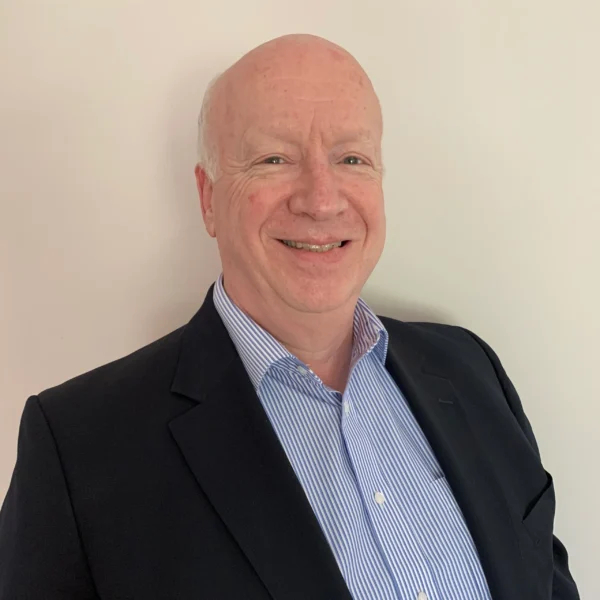
Lloyd Klickstein, M.D., Ph.D.
Lloyd Klickstein earned his BS in Biology, Chemistry, and Mathematics from Tufts University. He earned both his MD and PhD at Harvard Medical School. He then trained as a clinical rheumatologist at Brigham and Women’s Hospital, and completed a postdoctoral research fellowship at the Center for Blood Research in Boston. Dr. Klickstein worked as a physician-scientist at Harvard Medical School and Brigham and Women’s Hospital for over a decade. He then left academia and spent nearly two decades at Novartis as Global Head of Translational Medicine for the New Indication Discovery Unit—running novel programs in gene therapy for hearing loss, TORC1 inhibitors for aging, and others. With Joan Mannick, he co-led the landmark mTOR/immunosenescence trials. He went on to co-found Versanis Bio (acquired by Eli Lilly for up to $1.925B), where as CSO he led the development of bimagrumab, a muscle-preserving, fat-reducing antibody. He subsequently served as CSO of resTORbio and now leads Koslapp Therapeutics, focused on cancer prevention. He currently sits on the board of both Adicet Bio and the Scleroderma Research foundation. Dr. Klickstein is President & CEO of Koslapp Therapeutics. [AdicentBio]
LinkedIn: Lloyd Klickstein