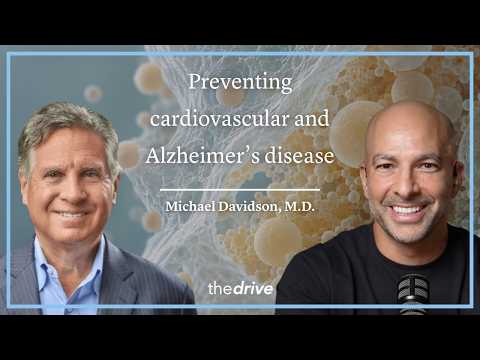
Michael Davidson is a world-renowned cardiologist, lipidologist, and the founding CEO of NewAmsterdam Pharma. He begins this episode by sharing how his family history shaped his interest in lipidology and primary prevention. He explains why prevention should focus on causal drivers of disease rather than near-term risk and examines the causal relationship between LDL and atherosclerotic cardiovascular disease. Michael then traces the complicated history of CETP inhibitors—from the original rationale that raising HDL would reduce cardiovascular risk to the failures of torcetrapib, dalcetrapib, and evacetrapib—and explains how lessons from these trials ultimately led to the development of obicetrapib. He reviews the phase 2 and phase 3 trials of obicetrapib, its effects on LDL-C, apoB, LDL particle number, and Lp(a), the ongoing cardiovascular outcomes trial, and where the drug could fit alongside statins and other lipid-lowering therapies. Peter and Michael discuss the relationship between statins and diabetes risk, then turn to the potential role of obicetrapib in Alzheimer’s disease prevention, exploring the genetics of APOE4 and CETP, cholesterol metabolism within the brain, and emerging biomarker data. Finally, Peter and Michael explore the benefits of omega-3 fatty acids and the challenge of delivering DHA to the brain, as well as ongoing work on klotho in preparation for clinical trials. They discuss the potential for AI to transform clinical trials and the scientific and financial challenges of developing new therapies for cardiovascular and neurodegenerative disease.
Subscribe on: APPLE PODCASTS | SPOTIFY | RSS | OVERCAST
“My mission for The Peter Attia Drive has always been to provide you with the most rigorous, evidence-informed insights on longevity. To do that without cluttering your experience with ads, we rely entirely on our premium members. If you’d like to support the work that makes this mission possible, consider becoming a premium member.”
– Peter
We discuss:
Timestamps: There are two sets of timestamps associated with the topic list below. The first is audio (A), and the second is video (V). If you are listening to this podcast with the audio player on this page or in your favorite podcast player, please refer to the audio timestamps. If you are watching the video version on this page or YouTube, please refer to the video timestamps.
- Michael’s path to lipidology, and his passion for primary prevention [A: 3:30, V: 0:11];
- Reframing prevention around causal drivers rather than time horizon [A: 9:30, V: 7:54];
- What CETP inhibition does, the evolutionary biology of CETP, the HDL-raising rationale, and Pfizer’s torcetrapib failure [A: 15:00, V: 14:11];
- Why raising HDL is thought to be beneficial, a quick review of the functions of HDL, and how this connects to torcetrapib [A: 24:00, V: 24:38];
- The graveyard of CETP inhibitors: Roche’s dalcetrapib, Lilly’s evacetrapib, and Merck’s REVEAL trial [A: 27:15, V: 28:29];
- The causality of LDL in cardiovascular disease [A: 34:30, V: 37:13];
- Reviving obicetrapib at NewAmsterdam, and confirming the benefit is LDL lowering: the TULIP data, the abandoned statin-intolerance path, and the Mendelian randomization verdict on HDL [A: 37:30, V: 40:23];
- Phase 2 and phase 3 trials of obicetrapib—ROSE, BROOKLYN, BROADWAY, and TANDEM—and the PREVAIL outcomes trial, with the European and US approval paths [A: 44:45, V: 49:21];
- Discordance among LDL-C, LDL-P, and apoB with CETP inhibition, and obicetrapib’s Lp(a)-lowering effect [A: 50:30, V: 56:07];
- Where obicetrapib fits in the lipid-lowering toolkit, the case against high-dose statins, and the problem of drug pricing [A: 57:30, V: 1:04:41];
- The case for obicetrapib in Alzheimer’s: the APOE4 and CETP genetics, the animal models, and funding Alzheimer’s research [A: 1:03:45, V: 1:12:03];
- Brain cholesterol metabolism and the APOE4 mechanism: the blood-brain barrier, astrocyte cholesterol efflux, the amyloid-tau cascade, the role of HDL, and why statins don’t cause Alzheimer’s disease [A: 1:08:00, V: 1:17:12];
- The biomarker evidence: the CSF pilot study, Alzheimer’s as a disease of middle age, the pharma graveyard problem, and the p-tau 217 results from BROADWAY [A: 1:17:45, V: 1:29:11];
- Whether obicetrapib translates into clinical benefit for Alzheimer’s disease: the risk of fooling yourself, the persistence of the amyloid dogma, ARIA in APOE4 homozygotes, and the next prevention trial [A: 1:28:00, V: 1:41:33];
- Fish oil, EPA, and DHA: the cardiovascular trials and the challenge of delivering DHA to the brain [A: 1:32:00, V: 1:50:32];
- Two open problems: using AI to reform clinical trials, and the statin–diabetes signal [A: 1:41:15, V: 1:57:50];
- What it takes to develop a drug, the biotech investment landscape, and the klotho program [A: 1:48:15, V: 2:06:22 ];
- Closing reflections: what to do if you carry APOE4, balancing motivation against over-testing, and the need for multiple therapies [A: 1:55:15, V: 2:15:31]; and
- More.
Show Notes
Michael’s path to lipidology, and his passion for primary prevention [A: 3:30, V: 0:11];
Tell folks a little about yourself, starting with what you do clinically
- Michael is a cardiologist and lipidologist
- He runs the Lipid Clinic at the University of Chicago and is a professor
- He sees patients 4 full days a month in a heavily prevention-focused practice
What was your path to lipidology from your training?
Were you always interested in prevention?
- Peter points out that lipidology is not necessarily a subspecialty within cardiology, although of course people who listen to this podcast are very familiar with it, and Tom Dayspring has been on a number of times
- For Michael it is a passion because his father died at age 47 of a heart attack when Michael was 16
- Michael had abnormal lipids that ran in the family, so he got interested in lipids in medical school
- He did the original niacin trials that go back to the late ‘70s and ‘80s
- In his fellowship he did research on omega-3 fatty acids for their lipid effects
- He was the first to use fish oil capsules to treat lipid disorders
- From there he got involved in all the statin trials
His passion has been to be involved in clinical trials while still practicing as a cardiologist and focusing primarily on prevention
- He opened a prevention center out of his fellowship, along with the research company that ran all the clinical trials
- The biotech startups started happening about 15 years ago
There isn’t a uniform consensus around how aggressively to prevent ASCVD. How do you think about primary prevention?
- Peter feels like sometimes people look at him as though he has multiple heads when he talks about taking prevention steps in 30-year-olds, because by any calculable metric their 10-year risk is very low
- Michael agrees, it’s always a hard sell to get a 30-year-old to start taking a statin
- He explains the primordial prevention concept: you want to stop plaque from forming before it is there
It is a lot easier to stop plaque from forming than to reverse it once it exists
- The mainstream path today is to wait until someone has significant plaque buildup, or even a heart attack or stroke, and then treat super aggressively to get the LDL down
- Genomics shows that a low LDL throughout life prevents heart disease to a much greater degree
- Lowering LDL before a heart attack is very effective
- Lowering LDL after a heart attack still has benefit
- But once you have heart failure, there is no benefit to lowering LDL
The earlier you start lowering LDL-C, the better
The 8 gram rule
- 8 g of cholesterol exposure over a lifetime leads to heart disease
- 200 mg/dL x 40 years = 8 g
- 100 mg/dL x 80 years = 8 g
- 80 mg/dL x 100 years = 8 g
“You can think about it in that sense that the data says that if you keep your LDL below 80 throughout your lifetime, you don’t get heart disease.”‒ Michael Davidson
We have the knowledge to prevent heart disease now, and applying it earlier in life is what makes the difference
- That is Michael’s pitch to the 30-year-old, and there is a lot of pushback
- If needed, he provides more information to identify who is at higher risk
Family history is very important
- But it is not always the most powerful motivator, even though Michael would expect it to be
- Peter says heart disease was his own foray into thinking about cardio-metabolic disease, and that Michael’s story is identical to that of his father-in-law
- Peter’s wife’s grandfather also died at 47 at the hands of his 16-year-old son
Michael’s family history: the two brothers experiment
- Michael’s brother had a bypass at age 44
- When Michael was 16 and his brother was 14, their father died, and their uncle (a family doctor) checked the brothers’ lipids—both were equally bad
- Michael took niacin in medical school and started a statin as soon as they became available
- His brother, also a family doctor, became a vegetarian (strict diet) and did not take statins until much later, then had significant coronary disease and bypass surgery at 44
- It is an N-of-1, but a good comparison: two brothers, one starts a statin early and one starts late
The 30-to-40 decade (and even 20 to 30) is such an important time frame because the plaque itself is starting to form relatively rapidly, and that is when you want your most effective treatment in place
- Caveat: with women, you have to be careful about pregnancy and balance that as well
People bring up relative risk, absolute risk, and 10-year risk, but the point is preventing heart disease at 80 or 90, not 10 years from now
{end of show notes preview}
Would you like access to extensive show notes and references for this podcast (and more)?
Check out this post to see an example of what the substantial show notes look like. Become a member today to get access.
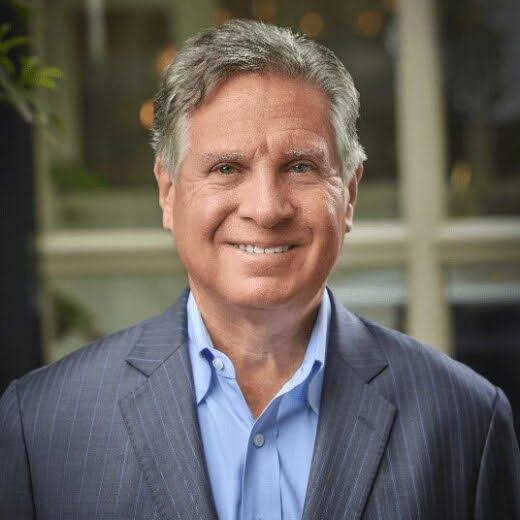
Michael Davidson, M.D.
Michael Davidson earned his Bachelor’s degree in Molecular Biology from Northwestern University and his Medical Degree from The Ohio State University College of Medicine. He completed both his residency and fellowship at Rush University Medical Center. Dr. Davidson is board-certified in internal medicine, cardiology, and clinical lipidology. He is a Clinical Professor of Medicine and Director of the Lipid Clinic at the University of Chicago. He is a physician scientist who specializes in heart disease prevention and his clinical research encompasses both pharmaceutical and nutritional clinical trials.
Dr. Davidson is a recognized leader in lipidology, having coordinated more than 1,000 clinical trials, published more than 350 peer-reviewed articles, and authored three books on lipid disorders and cardiovascular prevention. His research spans both pharmaceutical and nutritional interventions, with extensive work on statins, novel lipid-lowering therapies, and omega-3 fatty acids. In parallel with his academic career, he has founded several biotechnology and clinical research organizations focused on cardiovascular drug development and translational science, including the Chicago Center for Clinical Research, Omthera Pharmaceuticals, and Corvidia Therapeutics. He is currently the CEO of NewAmsterdam Pharma.
Dr. Davidson has been named one of “The Best Doctors in America” by Best Doctors Inc. for two decades and was named Father of the Year by the American Diabetes Association in 2010. He has served as the president of the National Lipid Association, and he continues to play a central role in advancing therapies aimed at reducing cardiometabolic and age-related disease risk. [UChicagoMedicine]
LinkedIn: Michael Davidson
X: @mdavidsonmd