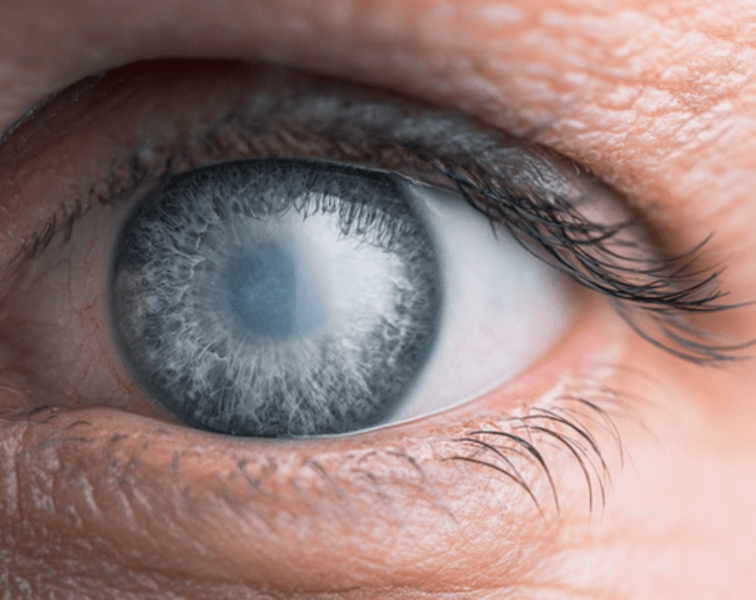
If you’ve stepped into your kid’s classroom recently, you may have noticed that a shocking number of children are wearing glasses. This isn’t a trick of the imagination—the prevalence of myopia, commonly called nearsightedness, is rising sharply. It is estimated that by 2050, about half the global population will have myopia, more than double the prevalence estimated in 2000.1 In the US, over 40% of kids aged 12–17 currently wear glasses or contact lenses.2
While lifelong reliance on vision-correcting lenses is inconvenient, the greater concern is what myopia can mean for long-term eye health. Having myopia, especially severe myopia, increases the risk for more serious, sight-threatening ocular conditions, including retinal detachment, myopic macular degeneration, glaucoma, and cataracts.3 With prevalence rising far faster than genetics can explain, we turn to the modern visual environment to understand what factors could be fueling myopia development. A handful of suspects have been suggested, but two dominate the conversation: less time outdoors, and more time on screens.
Screens are an obvious suspect—but that does not necessarily mean the screens themselves are the problem. Increased screen time tends to travel with less outdoor time, making both factors closely linked. The more interesting question, then, is whether screen use independently promotes myopia, or whether it matters primarily because it is part of this broader shift toward less bright outdoor light and more sustained near viewing.
The mechanics of myopia
To understand how these environmental factors could influence myopia risk, it helps to first understand what is happening in a myopic eye. The eye uses an elegant system of structures to bend and focus incoming light, and even tiny changes in that system can affect where in the eye an image comes into focus. Normally when we view a distant object, light enters the eye and is bent by the cornea, the clear surface at the front of the eye, and is bent further by the lens so that it focuses on the retina, the light-sensitive tissue lining the back of the eye. To focus on something closer, muscles inside the eye contract, allowing the lens to become thicker and more curved and thereby increasing its focusing power. (This process was explained in more detail by Dr. Steven Dell on The Drive.)
In most cases of myopia, however, the eyeball’s axial length—the distance from the front to the back of the eye—grows too long relative to its optical power. As a result, light from distant objects is focused in front of the retina rather than directly on it (as shown in the Figure), causing distant objects to appear blurry. (The curious reader may wonder why near objects remain clear. Light rays from nearby objects are already diverging when they enter the eye, allowing a myopic eye to bring them into focus on the retina at closer viewing distances.)
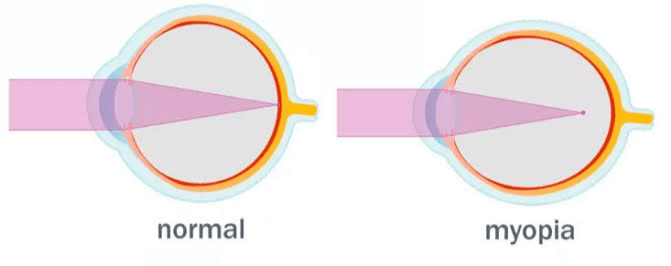
Myopia is most commonly diagnosed during childhood. This is because the eye, much like the rest of our biology, is particularly adaptable early in life. The developing eye fine-tunes its axial length in response to visual signals from the environment, such as light intensity and the patterns of focus and defocus created by viewing objects at different distances. This process continues through childhood and adolescence before settling down in early adulthood. Once the eye has become excessively elongated, there is no established way to reverse that elongation. Treatments can slow further progression, but they can’t undo elongation that’s already happened, which is exactly why preventing or delaying the initial onset of myopia matters so much.
Our research team spends hundreds of hours each month vetting studies and distilling dense literature to deliver evidence-informed insights on health and longevity. If you find value in our work, consider becoming a premium member and supporting our mission.








The power of the outdoors
With this context in mind, we can now examine how different factors in a child’s visual environment may impact vision. We’ll start with the one most well-studied: reduced outdoor light exposure.
Observational studies have repeatedly found that children who spend more time outside are less likely to develop myopia.4 Children with myopia receive significantly less bright light exposure than children without myopia, based on measurements from wearable light sensors.5,6 Axial length also increases most rapidly in children with low bright-light exposure, with slower growth among those receiving moderate or high daily exposure.7 Consistent with this pattern, axial elongation is greatest during the winter months, when outdoor light exposure is lowest.8
Of course, we cannot rely on observational data alone to assert that spending less time outdoors contributes causally to myopia. Randomized trials, however, do strengthen the case for causality.
In one randomized study of nearly 1,900 first-graders in China, intervention schools added a 40-minute outdoor activity class to each school day and encouraged families to increase outdoor activity outside school, while control schools continued their usual routines. After 3 years, 30% of children in the outdoor group had developed myopia, compared with nearly 40% of controls—a roughly 23% relative reduction.9
The effect also appears to be dose-responsive, further strengthening the case for causality. While the exact magnitude of the effect depends on factors such as age, study duration, and amount of outdoor exposure, several meta-analyses have found a nonlinear, dose-dependent relationship between outdoor time and myopia onset. For example, one meta-analysis10 found that adding an hour of outdoor time per day was associated with a nearly 50% reduction in incident myopia, while another found that increasing outdoor time from 30 minutes to about 2 hours per day reduced the risk of onset by 53%.11 Across study designs and populations, the relationship between outdoor time and lower myopia risk is strikingly consistent.
Importantly, this benefit appears clearest for preventing or delaying the onset of myopia. Increasing outdoor time has not consistently been shown to slow progression once a child is already myopic, so outdoor exposure early in childhood may be particularly important.12
Those trials give us good reason to believe that spending more time outdoors itself is protective, but they do not tell us exactly why. Two features of the outdoor visual environment could help explain the effect: the intensity of outdoor light and the greater amount of time spent viewing objects at longer distances.
The stronger case is for the intensity of bright outdoor light itself. While indoor illumination tends to measure between 50–500 lux, outdoor light is often in the 10,000–100,000 lux range. Even in the shade or on a cloudy day, light exposure outdoors is often 10–50 times greater than indoors.13 Animal studies suggest that bright light may alter retinal signaling: exposure to bright light appears to increase retinal dopamine signaling, which may inhibit signals that promote excessive axial elongation.14 The seasonal pattern in eye growth—with axial elongation fastest during the winter months—offers another clue that light itself may be contributing.8
There is also some evidence from humans that increasing light intensity alone may matter. In one school-based study, researchers increased classroom illumination from around 75 lux to roughly 550 lux. At follow-up, 10% of children in the control classrooms had developed myopia, compared with 4% in the brighter classrooms.15 The study had important limitations, but it does suggest that increasing light intensity, even indoors, may be protective, strengthening the case for light intensity as an important protective factor.
The second candidate is viewing behavior. Outdoor environments generally involve more varied and longer viewing distances and fewer prolonged periods of near work. While the evidence here is not as clear as it is for light intensity, we do have reason to believe that near work influences vision. Sustained exposure to close viewing distances, often less than 30 cm, has been associated with myopia onset and progression.16–18 Prospective studies also suggest that children who regularly interrupt prolonged near work have less myopic shift, though this evidence is mostly observational.19 Whether varied distance viewing is itself protective remains uncertain, but it is plausible that spending less time in sustained near focus contributes to the benefit of being outdoors.
Teasing apart the exact contribution of these two factors—light intensity and viewing distance—is virtually impossible, given that outdoor time naturally affects both exposures at once. While the evidence for light intensity is stronger, both factors may contribute. Regardless of the exact mechanism, the data from numerous trials consistently point towards greater time spent outside during childhood as protective against myopia.
Practically speaking, there does not appear to be a precise threshold for how much outdoor time is needed. The optimal amount may vary depending on season, geographic location, time of day, and other factors that influence total daily light exposure. Still, the available data suggest that 90–120 minutes outdoors per day is a reasonable target for reducing myopia risk in children. Because the relationship appears dose-dependent, this is better viewed as a target rather than a ceiling, and additional outdoor time may confer further benefit.
What about screen time?
Screen use has become nearly unavoidable in childhood, often placing the eyes at close viewing distances for hours at a time. This makes screens an intuitive suspect in the rise of myopia, but the evidence is not nearly as strong as you might expect.
A recent meta-analysis of more than 335,000 children and young adults found that each additional hour of daily screen time was associated with 21% higher odds of myopia. The relationship was nonlinear: compared with no daily screen exposure, 1 hour was associated with only about 5% higher odds, while 4 hours was associated with nearly double the odds.20
At first glance, that seems fairly damning. But when the authors separated the results by outcome, screen time was significantly associated with prevalent myopia, while the association with incident myopia was not statistically significant. In other words, screen usage was associated with having myopia, but not significantly associated with subsequently developing it.
The majority of studies included in this meta-analysis—and in the broader screen-use literature—are observational and cross-sectional, meaning they cannot tell us whether greater screen use preceded the development of myopia or followed it. But there is another way to interrogate the screen hypothesis: if screens themselves are uniquely harmful, we should see an association even after accounting for other features of the visual environment, such as outdoor time and traditional near work.
Here, too, the evidence is underwhelming. In an analysis of more than 12,000 children, screen time was not associated with myopia after accounting for factors including outdoor time, while reading and writing were.21 Another study of 566 children went further, simultaneously accounting for outdoor time, reading and writing, reading distance, and use of different screen devices. None of the individual screen exposures independently predicted whether a child had myopia, although smartphone and computer use were associated with somewhat greater axial length.22
Of course, the absence of a clear screen-specific effect does not mean that hours spent looking at a screen are irrelevant. A screen can simply be another form of near work. If sustained close viewing is the relevant exposure, we would expect screen-based near work to behave similarly to traditional forms of near work like reading and writing.
One study provides a useful comparison. In a cohort of 471 children studied from ages 2 through 9, investigators assessed associations between reading/writing or screen time and myopia at age 9, adjusting for factors like outdoor time and parental myopia. While more than 3 hours per day of reading and writing was associated with higher odds of myopia, a comparable amount of screen time was not significantly associated with increased risk.17 These analyses did not adjust reading/writing and screen time for one another, so the study cannot establish that traditional near work is more harmful than screens, but it further weakens the case that screen use itself is uniquely harmful to vision.
There are a few reasons a screen-specific association may be difficult to detect. These studies are observational and many rely heavily on questionnaires completed by parents. Beyond the usual limitations of self-report, parents cannot observe all of their children’s screen use, making these estimates particularly imprecise. Even if that weren’t the case, defining screen use is more challenging than you might imagine: watching television across the room, surfing the web on a computer, and responding to a text message on a phone involve very different viewing distances and patterns of focus, yet may all be lumped together as “screen time.”
But measurement challenges alone are unlikely to explain the broader pattern. Across studies, evidence that screen use itself is a major independent cause of myopia remains weak. Screens may still contribute, particularly when they involve prolonged, close viewing, but their clearest effect may be one of opportunity cost: time spent indoors on a device is time that cannot be spent outdoors getting the bright light exposure we know is protective. Rather than being uniquely harmful, screens may therefore be one feature of a broader shift in the visual environment toward more time indoors and more sustained near work.
The bottom line
To reduce the risk of childhood myopia, the most evidence-based advice is to get kids outside more. Around 90–120 minutes per day is a reasonable target, though more may confer additional benefit. The benefit appears strongest for preventing or delaying the onset of myopia, making outdoor exposure especially important early in childhood.
When it comes to near work and screen use, the evidence is less definitive. Long, uninterrupted periods of close viewing are reasonable to limit, but the available evidence does not suggest that screens themselves need to be treated as uniquely harmful. For myopia prevention, the more important goal may be to preserve a healthier visual environment: more time outdoors in bright light, less sustained near focus, and fewer hours of indoor activity crowding out both.
For a list of all previous weekly emails, click here.
References
1. Holden BA, Fricke TR, Wilson DA, et al. Global prevalence of myopia and high myopia and temporal trends from 2000 through 2050. Ophthalmology. 2016;123(5):1036-1042.
2. CDCMMWR. QuickStats: Percentage* of children† aged 2-17 years who wear glasses or contact lenses,§ by sex and age group – national health interview survey, United States, 2019¶. MMWR Morb Mortal Wkly Rep. 2021;70(23):865.
3. Haarman AEG, Enthoven CA, Tideman JWL, Tedja MS, Verhoeven VJM, Klaver CCW. The complications of myopia: A review and meta-analysis. Invest Ophthalmol Vis Sci. 2020;61(4):49.
4. Muralidharan AR, Lança C, Biswas S, et al. Light and myopia: from epidemiological studies to neurobiological mechanisms. Ther Adv Ophthalmol. 2021;13:25158414211059246.
5. Dhakal R, Lawrenson JG, Huntjens B, Shah R, Verkicharla PK. Light exposure profiles differ between myopes and non-myopes outside school hours. BMJ Open Ophthalmol. 2024;9(1):e001469.
6. Read SA, Collins MJ, Vincent SJ. Light exposure and physical activity in myopic and emmetropic children. Optom Vis Sci. 2014;91(3):330-341.
7. Read SA, Collins MJ, Vincent SJ. Light exposure and eye growth in childhood. Invest Ophthalmol Vis Sci. 2015;56(11):6779-6787.
8. Rusnak S, Salcman V, Hecova L, Kasl Z. Myopia progression risk: Seasonal and lifestyle variations in axial length growth in Czech children. J Ophthalmol. 2018;2018:5076454.
9. He M, Xiang F, Zeng Y, et al. Effect of time spent outdoors at school on the development of myopia among children in China: A randomized clinical trial: A randomized clinical trial. JAMA. 2015;314(11):1142-1148.
10. Xiong S, Sankaridurg P, Naduvilath T, et al. Time spent in outdoor activities in relation to myopia prevention and control: a meta-analysis and systematic review. Acta Ophthalmol. 2017;95(6):551-566.
11. Li D, Min S, Li X. Is spending more time outdoors able to prevent and control myopia in children and adolescents? A meta-analysis. Ophthalmic Res. 2024;67(1):393-404.
12. Kido A, Miyake M, Watanabe N. Interventions to increase time spent outdoors for preventing incidence and progression of myopia in children. Cochrane Database Syst Rev. 2024;6(6):CD013549.
13. Lanca C, Teo A, Vivagandan A, et al. The effects of different outdoor environments, sunglasses and hats on light levels: Implications for myopia prevention. Transl Vis Sci Technol. 2019;8(4):7.
14. Norton TT. What do animal studies tell us about the mechanism of myopia-protection by light? Optom Vis Sci. 2016;93(9):1049-1051.
15. Hua WJ, Jin JX, Wu XY, et al. Elevated light levels in schools have a protective effect on myopia. Ophthalmic Physiol Opt. 2015;35(3):252-262.
16. Gajjar S, Ostrin LA. A systematic review of near work and myopia: measurement, relationships, mechanisms and clinical corollaries. Acta Ophthalmol. 2022;100(4):376-387.
17. Wu F, Sun CH, Htoon HM, et al. The longitudinal associations of reading, writing and screen time with myopia at age 9 years among children from the GUSTO birth cohort. Acta Ophthalmol. 2026;104(3):e337-e345.
18. Ip JM, Saw SM, Rose KA, et al. Role of near work in myopia: findings in a sample of Australian school children. Invest Ophthalmol Vis Sci. 2008;49(7):2903-2910.
19. Huang PC, Hsiao YC, Tsai CY, et al. Protective behaviours of near work and time outdoors in myopia prevalence and progression in myopic children: a 2-year prospective population study. Br J Ophthalmol. 2020;104(7):956-961.
20. Ha A, Lee YJ, Lee M, Shim SR, Kim YK. Digital screen time and myopia: A systematic review and dose-response meta-analysis. JAMA Netw Open. 2025;8(2):e2460026.
21. Lanca C, Yam JC, Jiang WJ, et al. Near work, screen time, outdoor time and myopia in schoolchildren in the Sunflower Myopia AEEC Consortium. Acta Ophthalmol. 2022;100(3):302-311.
22. Liu S, Ye S, Xi W, Zhang X. Electronic devices and myopic refraction among children aged 6-14 years in urban areas of Tianjin, China. Ophthalmic Physiol Opt. 2019;39(4):282-293.