In this episode of The Drive, Peter explores how seemingly obscure basic science discoveries have laid the foundation for some of the most important medical breakthroughs of the past half century. Rather than focusing on the clinical applications of modern therapies, he traces the fascinating stories behind the scientists, experiments, and unexpected discoveries that ultimately led to transformative drug classes, revealing how groundbreaking advances often emerge from research with no obvious clinical goal. Through these historical case studies, Peter provides a new perspective on the unpredictable path of medical innovation and makes the case for why investing in basic scientific research remains essential for driving the next generation of life-changing therapies.
Subscribe on: APPLE PODCASTS | SPOTIFY | RSS | OVERCAST
“My mission for The Peter Attia Drive has always been to provide you with the most rigorous, evidence-informed insights on longevity. To do that without cluttering your experience with ads, we rely entirely on our premium members. If you’d like to support the work that makes this mission possible, consider becoming a premium member.”
– Peter
We discuss:
- The discovery of green fluorescent protein (GFP): how curiosity about glowing jellyfish transformed modern biology [2:30];
- Why basic research and nature’s biological innovations are the foundation of medical progress [10:45];
- The discovery of statins: how fungi provided the blueprint for cholesterol-lowering drugs [15:15];
- From snake venom to ACE inhibitors: the discovery of a cornerstone therapy for cardiovascular disease [21:00];
- From Yellowstone hot springs to PCR: how Thermus aquaticus transformed modern biology and medicine [28:00];
- The discovery of CRISPR: from salt flats to gene editing and genetic medicine [37:15];
- The discovery of GLP-1 receptor agonists: from Gila monster venom to a new era in metabolic medicine [47:30];
- Why curiosity-driven basic research is essential for the future of medical innovation [54:15]; and
- More.
Show Notes
The discovery of green fluorescent protein (GFP): how curiosity about glowing jellyfish transformed modern biology [2:30]
- In the summer of 1961, a young Japanese biochemist named Osamu Shimomura and his wife, Akemi, and his mentor, Frank Johnson, loaded into a station wagon in Princeton, New Jersey, and drove 3,000 miles to the northwest corner of Washington State
- Their destination was a place called Friday Harbor on San Juan Island
- They went there for jellyfish, specifically Aequorea victoria, a small, mostly transparent jellyfish that drifts in the cold waters of the Pacific Northwest
- Its umbrella is rimmed with tiny organs that emit a faint green light
- [shown in the figure below]
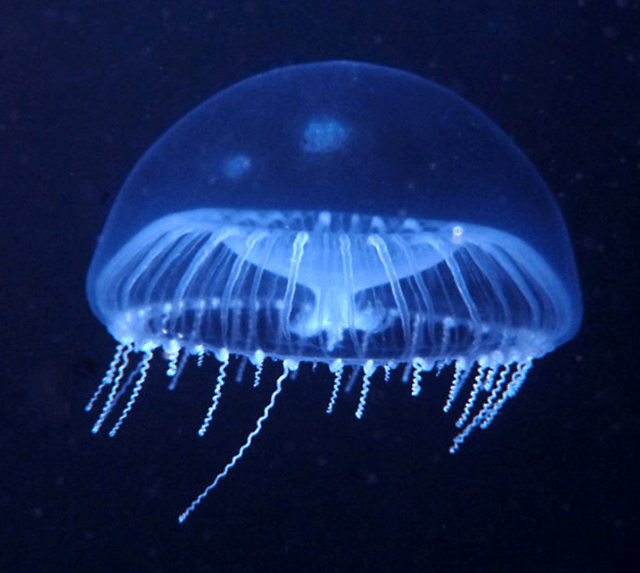
Figure 1. Aequorea victoria. Image credit: Vic High Marine
- Shimomura was building a career studying the chemistry of bioluminescence
- They scooped them up one at a time with shallow dip nets, brought them ashore, and cut the luminous rings off the umbrellas with scissors by hand, one jellyfish at a time
- The goal that first summer was 50,000
- They came back the next summer and the next
- For 19 consecutive years, Shimomura and his family and a rotating cast of students returned to Friday Harbor
- By the time they finally stopped in 1988, they had cut the bells off approximately 850,000 jellyfish drawn from a population of about 1 million pulled from the bay
- 19 summers, a million jellyfish
If you had walked up to Shimomura on a dock in 1965 and asked him what he was doing, he would’ve told you honestly that he was trying to understand how a jellyfish produces light
That was the whole project
- He wasn’t trying to cure a disease
- He wasn’t designing a drug
- And he wasn’t setting out to revolutionize the very process of scientific discovery
- He was a man with scissors cutting rings off jellyfish because he wanted to know how the animal glowed
Here’s what he found
- When he ground up the jellyfish rings and purified the proteins, the first thing he isolated was a protein that emitted blue light, not green, and only emitted that light in the presence of calcium ions
- He called it aequorin
- That by itself was a beautiful piece of biochemistry
- Nobody had ever seen a calcium triggered light producing protein before
- But while he was purifying aequorin, he kept noticing in the background a trace contaminant, a second protein that didn’t glow on its own
- When you shone the right wavelength of blue light on it, it fluoresced bright green
- He purified it, and he named it plainly green fluorescent protein (GFP)
The jellyfish, it turned out, was running a two-protein optical system
- Aequorin generated blue light from a calcium signal
- That blue light then excited GFP sitting right next to it, which absorbed the blue light and re-emitted the energy as green
- And that’s the glow you see in the water
- An elegant piece of jellyfish biology
- Shimomura published it, and he and his family went back to catching more jellyfish, mostly to study Aequorin
GFP—the green protein—sat there in the literature, basically ignored for almost 30 years
Here’s where the story becomes extraordinary
- It eventually turned out that GFP has 3 properties that nobody had any reason to expect from a random jellyfish protein
- 1 – It folds itself
- You don’t need any helper machinery to make it work
- 2 – It builds its own fluorescent core all by itself from 3 of its own amino acids and using nothing but oxygen
- 3 – GFP works in almost any cell in almost any organism on earth
- This is the part that changes biology
- Because it’s a protein, that means we can put the gene into an organism, and the organism will make GFP
- Because GFP folds itself and creates its own fluorescent core, it doesn’t rely on any jellyfish-specific signal
- So we can put the gene for GFP into a bacterium, and it glows
- Put it in a worm, the worm glows
- Put it into a mouse, into a plant, into a human cell in a dish—they all glow under the presence of blue light
Think about what that means…
{end of show notes preview}
Would you like access to extensive show notes and references for this podcast (and more)?
Check out this post to see an example of what the substantial show notes look like. Become a member today to get access.