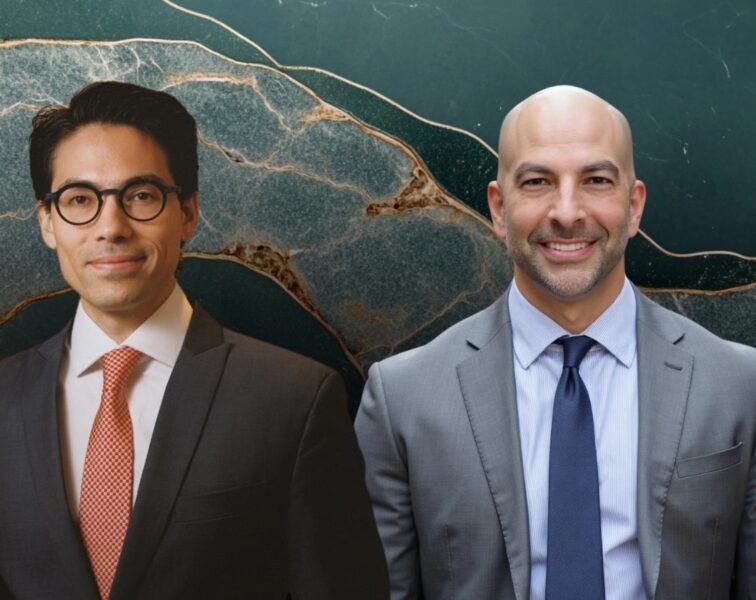
B.J. Miller, a hospice and palliative care physician, and Bridget Sumser, a licensed social worker specializing in serious illness and end-of-life care, join Peter to share insights from their decades of work supporting people at the end of life. In this episode, they explore the emotional and physiological processes of dying, the cultural barriers that prevent meaningful conversations about death, and how early engagement with mortality can lead to greater clarity and connection. The conversation highlights the distinctions between hospice and palliative care, the nature of suffering beyond physical pain, and the transformative role of honesty, forgiveness, and relational awareness in the dying process. Through stories and reflections, B.J. and Bridget reveal what truly matters in the end—and how the dying can teach the living not only how to face death but how to live more fully.
Subscribe on: APPLE PODCASTS | SPOTIFY | RSS | OVERCAST

We discuss:
- The personal journeys of BJ and Bridget into end-of-life care, and the connection between living and dying [3:30];
- What dying looks like: the physical, cognitive, and emotional realities at the end of life [13:15];
- How historical perspectives on death contrast with modern experiences of dying [25:30];
- The difference between palliative care and hospice care [30:45];
- The systemic challenges surrounding hospice care: why patients often enter it too late to receive its full benefits [35:30];
- How delayed hospice referrals and unspoken preferences often prevent patients from dying where and how they truly want [39:30];
- The realities of home hospice: challenges, costs, and burdens placed of families [43:45];
- How proactively engaging with the reality of death can avoid unnecessary suffering and promote a more peaceful ending [53:30];
- How palliative care is misunderstood and underutilized—especially in cancer care [1:02:45];
- Palliative care in the case of Alzheimer’s disease: emotional support, future planning, and family involvement [1:12:15];
- The importance of having an advance directive: defining what matters most before it’s too late [1:23:00];
- The differences between how young and old individuals experience dying from cancer [1:30:15];
- The difference between pain and suffering, role of medicine in pain relief, and why emotional healing is essential at the end of life [1:35:45];
- Dying well: the power of self-honesty and human connection at the end of life [1:47:00];
- How psychedelics like psilocybin can unlock emotional breakthroughs and deepen connection for patients near the end of life [1:55:15];
- Lessons from the dying on how to live well [1:57:30];
- The physical process of active dying, and the emotional and practical considerations for loved ones [2:09:30]; and
- More.
Show Notes
The personal journeys of BJ and Bridget into end-of-life care, and the connection between living and dying [3:30]
- BJ was a previous guest on the podcast he spoke a little bit about some of the topics we’re going to get to today [episode #135]
- When Peter reached out to him a few months ago to talk about this podcast, he immediately suggested bringing Bridget along
- Peter wanted to understand more about living and thought we could learn a lot from people who are dying
- People who listen to this podcast know that Peter thinks the quality of life matters as much, and potentially more than the length of life
- A big part of that comes down to things people think about during their life and during the end of their life
- Maybe there are regrets that people have that only surface at the end of life
Why is this a great three person discussion as opposed to a two person?
- BJ loves the setup for this conversation
- It’s not quality of life versus quantity of life (kind of false dichotomy)
- BJ has worked with Bridget in a myriad of ways over the years
- They are going to thwart the idea that there’s an objective, an approach to death that is the way to go
- They’re not going to cite much data, it’s not an easily studied phase of life
- What data exist tends to be qualitative
With all that subjectivity, it feels really important to have other voices sharing their point of view of a similar outlook (thats in part why he wanted to include Bridget)
- BJ’s work in the last four years has pulled him farther away from being at a bedside
- Both BJ and Bridget have spent many countless hours in hospital bedsides and other places that they’ll be drawing from
To get to the questions that Peter is interested in answering, so much of the work preparing for dying begins earlier in life (one way in another)
- For the audience to imagine deathbed scenes that in the final moments there’s this great epiphany or climax ‒ that can happen, but that’s really not the norm
- A lot of the action is in the days, weeks, months, years preceding the death moment
- Death is a moment
- One thing they want to get across is we need to bring dying and living together
- They are part of a whole, they’re not at odds
- And so when do we begin dying?
- The second we are born
- So in some ways, all of us have some access to this subject already
- Bridget and BJ are just a little bit closer to it on some level
Bridget, what drew you to this space? It is an uncomfortable place to stand, what’s drawn you to it?
- We all have our places in the world, and while this is an uncomfortable place maybe from the outside, for Bridget, it is a pretty comfortable place, and that was what got her there
- She had many people in her life die
- She was in pretty close proximity to those deaths and she wasn’t freaking out
- She looked around and a lot of other people were freaking out, and she was sort of like, “Oh, this is weird. Am I unaffected? Am I guarded in a way that makes it some kind of numb?”
- No
Actually it was more just that there was something in her that was okay around dying and also really curious about it
- That’s how she got to this work
What were some of the experiences you had growing up?
- Bridget’s cousin Kristen died when she was 13 and Bridget was 18
- She had pulmonary primary hypertension
- Bridget was with her the day she died
- As you can imagine, a 13-year-old dying is a pretty chaotic scene
- She was not in an official dying process that anyone was recognizing
- It was crisis-y and traumatic and there was just a stillness in Bridget
- Bridget was very affected, there was a lot of emotion
- She felt fear and overwhelm, but she also felt really able to be there
- Bridget was 18 and the adults around her were all over the place
- It was less about others, although she felt quite connected to Kristen
Bridget shares, “It was more about being able to stay in my own body and be in my own experience and pay attention to what was happening, make contact with what was happening.”
- It was a pretty internal experience and awareness
- It wasn’t until later experiences with one of her best friend’s moms a few years later that Bridget felt that capacity in relationship to others as a main supporter
- That first imprint was really like, there’s something in this experience for Bridget
People who listened to the earlier episode with BJ will be familiar with his story
For those who aren’t, can you give the super “Reader’s Digest version” of your story and how it probably shaped a lot of what you do today?
- For sure it did
- BJ went into medicine very simply because he had been a patient
- At age 19, a sophomore in college, around the time Bridget was having her experience at the bedside one way or another, he was in the bed thanks to an electrical injury at Princeton
- He was screwing around on a commuter train and climbed up on top
- He had a metal watch on his left wrist and the electricity arced to the watch
- That was that, and he became very close to death
- You could say part of his body died
- He lost both legs and one arm (part of them)
- That was a really big wake-up call
- Peter points out the magnitude of the burns BJ sustained, the skin grafts that required
How long were you in the hospital?
- BJ was in the burn unit for about 3 months
- Burn units are horrible ‒ these are houses of pain of a certain kind
- He was on the edge for about 3 months
Peter asks, “Did you lose kidney function?”
- BJ doesn’t recall
- He remembers looking over at the monitors many weeks in and his heart rate was 190 and just sitting there
- There’s a lot of fallout from an injury like that, and it takes a long time for the body to settle in and declare what’s going to live and what’s not
- The amputations were sequential
- They take a little bit, see what tissue’s viable
- All the while the risk of infection…
- The way generally people die from burns is infection
- Because you lose immediate defenses through your line of defense of your skin
- So [you live in] a hyper sterile environment, no windows, nothing natural about it at all
- It was a long time until he was “out of the woods,” and it was clear he was going to survive
Then becomes this longer work of learning to cope with this new body
- It entailed a lot of mourning, a lot of grief, a lot of effort, a lot of creativity on his behalf, as well as a lot of people around him
- It took many, many months to get out of that setting from the burn unit, into a step-down unit, then into a rehab unit, and then outpatient
- Then begins the work of re-entering the world
- That’s its own challenge with a visible disability
- BJ used to be so ashamed of the skin grafts; he used to cover it up
- There was the work of getting used to it and being comfortable in his own skin, literally, again
- That took about 2 years before he was willing to show anybody this
- After 5 years, he hit another milestone: inhabiting his own life again on some level
- Being anything other than an object to glare at
It’s a very slow process and it’s ongoing
- BJ recently had a procedure that’s a fallout from a central line that was being placed in his neck that got botched and clotted off (35 years ago)
- He gets new legs every 2 years or so, and that’s its own process
What dying looks like: the physical, cognitive, and emotional realities at the end of life [13:15]
- A moment ago, BJ alluded to the idea that movie deathbed scenes are probably the exception and not the rule
- Peter wants to explore this idea a little bit more
- He also wants to help people understand at the population level, what death really looks like
- On this podcast we talk a lot about causes of death
- The 4 horsemen
- We know about cardiovascular disease, and we know about cancer, and we know about neurodegenerative disease, and we can talk forever about these things
- But we don’t really talk about the very, very end, perhaps with the exception of a fatal myocardial infarction
- About 50% of MIs are fatal
- But about 50% are not, and they’re just setting you up for maybe heart failure or something else
{end of show notes preview}
Would you like access to extensive show notes and references for this podcast (and more)?
Check out this post to see an example of what the substantial show notes look like. Become a member today to get access.
BJ Miller, M.D. and Bridget Sumser, L.C.S.W.
BJ Miller earned an undergraduate degree in art history from Princeton University. He earned his medical degree from UCSF and completed an internal medicine residency at Santa Barbara Cottage Hospital, where he was chief resident. He completed a fellowship in hospice and palliative medicine at Harvard Medical School, working at Massachusetts General Hospital and the Dana-Farber Cancer Institute. [Family Action Network]
Dr. Miller was an Assistant Clinical Professor and palliative care physician at UCSF for over 13 years. He has counseled over 1,000 patients and family members on dealing with difficult health situations. His 2015 TED talk, What Really Matters at the End of Life, has been viewed over 11 million times. He co-authored the book, A Beginner’s Guide to the End: Practical Advice for Living Life and Facing Death. Dr. Miller is the co-founder and President of Mettle Health, an online palliative care service that provides support to patients and families living with illness. [Mettle Health]
Bridget Sumser earned an undergraduate degree from Mills College. She earned a Master’s in Social work and completed a Zelda Foster fellowship in palliative and end-of-life care at the New York University Silver School of Social Work. She also completed a palliative care social work fellowship at Beth Israel Deaconess Medical Center in New York. She is a member of the Social Work Hospice and Palliative care Network, and was honored as an emerging leader in Palliative Social Work in 2015. Bridget Sumser is a licensed clinical social worker who specializes in helping people living with serious illness. She works as a social worker with the Palliative Care Program for adults at UCSF , a counselor at Mettle Health, and has a private practice. She co-edited the book Palliative Care: A Guide for Health Social Workers. [UCSF]