Cervical cancer is one of the few cancers we can often prevent before it starts. The reason is straightforward: when screening is done consistently, it can identify risk long before cancer develops. For many women, that process begins in early adulthood with a familiar test, the Pap smear.
For decades, cervical cancer screening has depended on an in-office exam in which a clinician collects a sample from the cervix to look for precancerous or cancerous cells. Recently, however, a newly approved self-collection option has made headlines. The important point is not that we can now test for high-risk human papillomavirus (hrHPV), the virus that causes nearly all cervical cancers—we have been able to do that for years. What is new is that many women may now be able to collect the sample themselves, outside of a traditional pelvic exam.
So what do we know about these newer tests, and what do they mean for cervical cancer screening?
How cervical cancer develops
Unlike many cancers, cervical cancer usually follows a slow, predictable sequence. That predictability is what makes screening so effective: it allows us to identify and treat precancerous changes before cancer ever develops.
The process typically begins with infection by human papillomavirus (HPV). HPV is the most common sexually transmitted infection in the world, and most sexually active people will encounter it: More than 80% of sexually active individuals contract HPV by age 45.1 For most people, this isn’t cause for alarm—around 90% of infections resolve on their own within one to two years,2 and many people never know they were infected at all.
In some cases, however, HPV infection persists and causes cellular changes that may result in certain types of cancer, including cervical, anal, and throat cancers.
There are more than 200 types of HPV, but only a handful pose a meaningful cancer risk. Persistent infection from certain high-risk strains, especially types 16 and 18, accounts for most cervical cancer cases and a substantial share of other HPV-related cancers.
The typical progression looks like this:
- Initial hrHPV infection, most of which clears spontaneously
- Persistent infection over years
- Cellular changes that become detectable as precancer
- Invasive cervical cancer, if those changes are not identified and treated
Critically, this process is slow. Cervical cancer typically takes 10 to 20 years to develop from initial infection, though this timeline can be significantly shorter in women with immunosuppressive conditions, such as HIV.
Our research team spends hundreds of hours each month vetting studies and distilling dense literature to deliver evidence-informed insights on health and longevity. If you find value in our work, consider becoming a premium member and supporting our mission.











What are the options for screening?
Because this process usually unfolds over many years, regular screening gives us ample opportunity to catch the majority of cervical cancer cases early on. The question is what, exactly, we should look for. Based on the known progression, we can see there are two signals we could detect: the presence of a cancer-causing virus, or the presence of abnormal (precancerous or cancerous) cells.
Most women are probably already familiar with the test for abnormal cells—this is the Papanicolaou test, more commonly referred to as a Pap smear. The Pap smear requires a clinician to obtain a sample from the cervix during an in-office speculum exam. A brush or spatula is used to collect cells, which are then assessed with cytology to detect any abnormalities.
Routine Pap smears reduce cervical cancer incidence and mortality by about 80%, but they are not without limitations.3 They require an in-person exam, which means scheduling, access, cost, and discomfort can all become barriers to screening. And biologically, Pap smears detect risk relatively late in the pathway: not when HPV infection first appears, but after cellular changes have already occurred. Cytology also requires human interpretation, which means the results can be somewhat subjective.
None of this is to say that we should altogether abandon Pap smears—they are well-validated, relatively low-risk tests that have saved hundreds of thousands of lives. But that doesn’t mean we need to rely only on Pap smears for cervical cancer screening.
The other option is to look for the virus that is known to cause cervical cancer. While women may be less familiar with it, this isn’t a new idea: Beginning in the early 2000s, several organizations began recommending hrHPV testing as an adjunct to Pap smears in certain women. In 2018, guidance shifted further, allowing women aged 30 and older to choose primary hrHPV testing as a screening option. Because hrHPV testing looks for the causal virus itself, it can identify elevated risk upstream of cytologic abnormalities, before precancerous or cancerous cells are visible under the microscope.
That said, the presence of HPV does not guarantee cancer will develop. Many infections clear on their own, particularly in younger women, so testing too early can detect transient infections that would never progress. This is why current US Preventive Services Task Force (USPSTF) guidelines recommend Pap smears every 3 years for women ages 21–29, and primary HPV testing (or co-testing) every 5 years for women ages 30–65.
So HPV testing itself is not new—what has changed is who can collect the sample and where.
The biology that enables self-collection
The way HPV testing works is critical to this development. Much like the early COVID-19 tests, HPV testing uses molecular assays that detect viral DNA from a swab. This enables detection of even very low viral loads, so it’s a sensitive and non-subjective way of identifying the presence of high-risk strains.
Importantly, HPV can be detected in cells from the vaginal wall, meaning that testing does not require direct swabbing of the cervix. Traditionally, this type of sampling would still occur during a clinical exam, albeit often without a speculum.
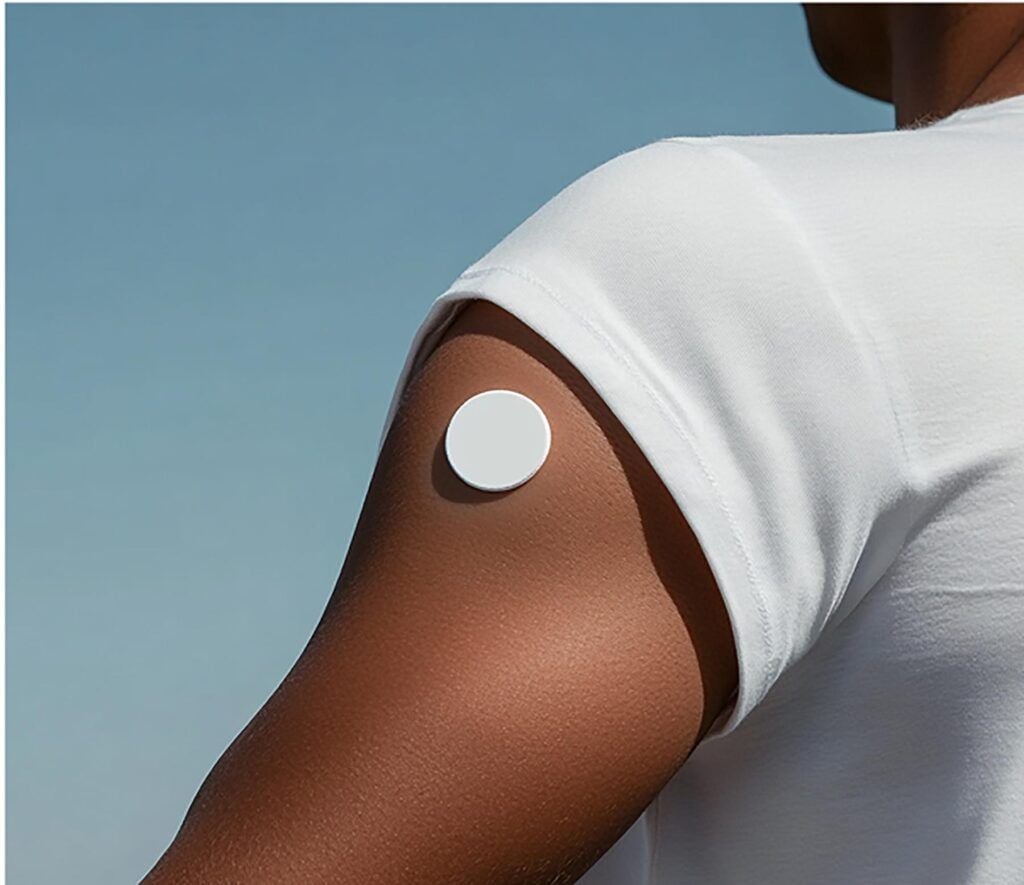
Because there is no need to access the cervix, however, it is possible for women to self-collect samples for HPV testing. This is what allowed for the 2025 FDA clearance of the Teal Wand, a prescription device that allows vaginal self-collection at home or in another private setting. The novelty is not the molecular assay itself, but the approved pathway for collecting the sample outside the clinic.
Self-collected and clinician-collected samples show high agreement in validated settings: The positive agreement between clinician- and self-collected samples was 0.87, while the negative agreement was 0.96.4 In other words, self-collected samples were usually concordant with clinician-collected samples, particularly when the test was negative.
Why does this matter? For many women, the option to stay up to date on screening with an at-home test is a welcome change. While the test may currently be too costly for women with financial limitations (at the time of this writing, the Teal Wand costs $99 with insurance and $249 without), we can likely expect this cost to go down, particularly as screening guidelines are updated to include self-collection as an option. Regardless, avoiding an uncomfortable doctor’s visit for asymptomatic women reduces barriers to screening, and improving access to cancer screening is valuable in its own right.
What did we learn from HPV vaccines?
The same biology that makes HPV testing useful also explains why HPV vaccination is so powerful. If persistent infection with high-risk HPV drives cervical cancer, then preventing that infection in the first place should dramatically reduce cancer risk. That was the promise behind the early Gardasil campaigns: fewer HPV infections, fewer precancers, and ultimately fewer cervical cancers.
The current formulation, Gardasil 9, protects against nine different types of HPV, including the HPV types responsible for 80–90% of cervical cancers. Impressively, cervical cancer rates were reduced by 87% in women vaccinated as young adolescents (ages 12–13).5 Vaccinating adolescents, ideally prior to sexual activity, reduces risk of all HPV-induced cancers in both men and women, including cervical, anal, penile, and throat cancers.
It’s worth emphasizing two important points here:
First, these vaccines help to prevent cancer. That is an astounding feat and not something we should ignore.
Second, the vaccine data reinforce how central persistent HPV infection is to cervical cancer biology. That, in turn, strengthens the rationale for screening methods that look for high-risk HPV directly.
If you are in the category of adults who have been vaccinated against HPV, that alone substantially lowers your risk for cervical (and other HPV-related) cancer; however, vaccination does not prevent every cancer, so screening is still recommended, even for fully vaccinated adults.
The bottom line
Cervical cancer is one of the clearest examples of cancer prevention working as intended. The disease usually develops slowly, has a well-established viral cause, and often passes through detectable precancerous stages before becoming invasive. That combination is why Pap-based screening changed the trajectory of cervical cancer so dramatically, preventing hundreds of thousands of cases and substantially reducing deaths.3,6
HPV testing builds on that success. It does not make Pap smears obsolete, eliminate the need for clinical follow-up, or mean that every woman should screen the same way. But by testing for the causal virus itself, HPV testing moves screening earlier in the disease pathway. And by allowing self-collection, it may also address the more practical problem that undermines even the best screening programs: people have to actually complete the test.
That is the real significance of at-home HPV testing. It is not a new theory of cervical cancer, and it is not a substitute for appropriate medical care after an abnormal result. It is a way to reduce friction around one of the most effective cancer-prevention tools we have. For many average-risk women, it simply adds another viable path to screening. For those who are overdue because of discomfort, scheduling constraints, geography, or limited access to care, self-collection may be the difference between being unscreened and being up to date. That is not a small improvement. In screening, adherence is not a logistical detail. It is the intervention.
For a list of all previous weekly emails, click here.
References
1. Chesson HW, Dunne EF, Hariri S, Markowitz LE. The estimated lifetime probability of acquiring human papillomavirus in the United States. Sex Transm Dis. 2014;41(11):660-664. doi:10.1097/OLQ.0000000000000193
2. CDC. About Genital HPV Infection. Sexually Transmitted Infections (STIs). March 3, 2026. Accessed March 16, 2026. https://www.cdc.gov/sti/about/about-genital-hpv-infection.html
3. Cervical Cancer Screening (PDQ®). February 10, 2026. Accessed March 9, 2026. https://www.cancer.gov/types/cervical/hp/cervical-screening-pdq
4. Accessed March 9, 2026. https://www.womenspreventivehealth.org/wp-content/uploads/EVIDENCE-REVIEW-2025-Cervical-Cancer-Screening-Update.pdf
5. Falcaro M, Castañon A, Ndlela B, et al. The effects of the national HPV vaccination programme in England, UK, on cervical cancer and grade 3 cervical intraepithelial neoplasia incidence: a register-based observational study. Lancet. 2021;398(10316):2084-2092. doi:10.1016/S0140-6736(21)02178-4
6. Yang DX, Soulos PR, Davis B, Gross CP, Yu JB. Impact of widespread cervical cancer screening: Number of cancers prevented and changes in race-specific incidence: Number of cancers prevented and changes in race-specific incidence. Am J Clin Oncol. 2018;41(3):289-294. doi:10.1097/COC.0000000000000264