In this episode, Peter returns to the topic of peptides, offering a clear and accessible guide to a field surrounded by both genuine scientific promise and widespread misinformation. Peptides are increasingly marketed for everything from injury recovery and muscle growth to longevity and improved appearance, often with claims that extend far beyond the available evidence. Rather than promoting or dismissing peptides as a category, Peter presents a practical framework for evaluating any peptide: what it is, how it is supposed to work, and where the science is strong, weak, or simply absent. He then applies this framework to a specific example before examining the risks of gray-market products, concerns about sourcing and quality, and where the field may be headed—ultimately helping listeners distinguish legitimate therapies from hope that has been packaged and sold without sufficient evidence.
Subscribe on: APPLE PODCASTS | SPOTIFY | RSS | OVERCAST
“My mission for The Peter Attia Drive has always been to provide you with the most rigorous, evidence-informed insights on longevity. To do that without cluttering your experience with ads, we rely entirely on our premium members. If you’d like to support the work that makes this mission possible, consider becoming a premium member.”
– Peter
We discuss:
Timestamps: There are two sets of timestamps associated with the topic list below. The first is audio (A), and the second is video (V). If you are listening to this podcast with the audio player on this page or in your favorite podcast player, please refer to the audio timestamps. If you are watching the video version on this page or YouTube, please refer to the video timestamps.
- What peptides are and why they must be evaluated individually [A: 3:15, V: 0:11];
- A five-question framework for evaluating peptides and other drugs [A: 5:30, V: 3:40];
- A three-tier system for classifying the scientific evidence behind peptides [A: 10:00, V: 8:23];
- Evaluating BPC-157: unclear mechanisms, absent human evidence, and unknown risks [A: 14:00, V: 12:35];
- Why BPC-157’s expanding claims do not indicate a broad mechanism [A: 20:45, V: 19:13];
- CJC-1295: biological activity versus meaningful clinical benefit [A: 23:30, V: 21:51];
- Why testimonials about peptide benefits cannot establish the effectiveness of peptides [A: 27:30, V: 25:39];
- The placebo effect, and the importance of controlled trials for evaluating peptides [A: 31:00, V: 29:05];
- What FDA approval provides when evaluating peptide safety and effectiveness [A: 34:45, V: 32:58];
- Why prescriptions from doctors, compounding pharmacies, and third-party testing do not validate unapproved peptides [A: 38:30, V: 36:48];
- Approved peptides sold on the gray market: why evidence for an approved peptide does not automatically extend to gray-market versions [A: 40:45, V: 39:06];
- Addressing the claim that pharmaceutical companies ignore effective natural peptides because they cannot be patented [A: 43:00, V: 41:26];
- The promise of peptide science, and the risks of the gray-market wellness industry [A: 46:30, V: 44:55];
- Why peptide claims must be falsifiable and why evidence should precede widespread use rather than be expected to catch up later [A: 49:00, V: 47:17]; and
- More.
Show Notes
*Notes from intro:
- Today we are returning to the topic of peptides
- Why? It’s a topic surrounded by a lot of misinformation, so we wanted to put out a concise version that’s actually going to be accessible to everyone
- And we’re making the original AMA and the show notes (which were done several months ago) free to everyone as well
- So for anyone who wants the fuller, more detailed treatment, you can go back to that one
- But otherwise this is going to be a one-stop shop
- This is a topic Peter gets asked about more than almost anything else right now, and for good reason
- Peptides sit at the intersection of what might be described as real biological promise, genuine clinical wins, and rampant commercialization
- They get marketed as cutting edge regenerative therapies for everything, from muscle repair to, “longevity,” to looking better on the beach
- Peter understands why people are drawn to peptides
- If you’re in pain, if you’re injured, if you’re aging, if you’re exhausted, frustrated, the promise of something that accelerates healing and restores your body is almost impossible to ignore
- Peter doesn’t think that most people using these compounds are reckless—they’re hopeful
- His concern is that hope has become a product
- It’s being sold by attaching extraordinary claims to molecules that, in many cases, have never earned such claims
The goal today isn’t to promote peptides or to dismiss them outright as a category
- It’s to hand you a framework for thinking about any peptide you come across
- What it is, where the science is solid, where it’s weak, and where it’s simply absent
- We’ll run through that framework with an example
- And then we’ll zoom out to the gray market sourcing and where the field is headed
- Ultimately, you should leave with a framework for deciding when the answer is yes, when the answer is no, and when the honest answer is that the evidence simply isn’t there
What peptides are and why they must be evaluated individually [A: 3:15, V: 0:11]
First, define what peptides are
- When people ask whether peptides work, Peter’s first response is, “You’re asking the wrong question.”
- That’s sort of like asking whether drugs work or whether surgery works
A peptide is a short chain of amino acids
- Some of these are among the most important drugs ever developed, like insulin and of course the now ubiquitously used GLP-1 agonists, while others have essentially no credible evidence behind them
Peter emphasizes, “The word tells you almost nothing about whether a molecule is safe, effective, or even scientifically plausible.”
- It’s a chemical description, not a mark of quality
- And one of the biggest marketing successes of the last decade has been convincing people otherwise
- Distilling this increasingly popular group of molecules down into a single word does a significant amount of rhetorical heavy lifting
- Peptide conveys sort of a naturalistic connotation, essentially conveying that it is safe and effective by default, but these are drugs
- If you bought into the natural is better argument
- Most of what you’re buying is synthetic, deliberately modified versions of natural molecules, engineered to bind to a receptor more tightly, to last longer in the body, or to hit a target the original protein or peptide never could
“Rather than ask one simple question, whether peptides work, we actually need to be asking multiple specific questions about individual peptides.”‒ Peter Attia
A five-question framework for evaluating peptides and other drugs [A: 5:30, V: 3:40]
When people are looking to evaluate these individual peptides, what questions do you think are the most helpful, and why are they so important to be able to answer?
⇒ AMA #83 outlined a framework for evaluating many of the most popular peptides
- What Peter likes about this framework is it removes personal bias by forcing you to ask the same questions of drugs
- Drugs that you believe are good as drugs, or don’t, or are indifferent about)
- It works for any drug, not just the category of drugs known as peptides
“If you’re putting something into your body, I think these are the questions worth asking.”‒ Peter Attia
1 – Is there a viable mechanism of action?
- A real mechanism of action forces the claim to become falsifiable
- It asks, what is the molecular target?
- What changes downstream?
- And why would that plausibly produce the clinical effect being claimed?
- Without that chain, a claim like, “It boosts energy,” or, “Supports immunity,” or, “Reduces inflammation,” can mean almost anything and almost certainly nothing
- It becomes marketing language, not biology
- The other reason is that mechanism helps identify failure modes
- A molecule may bind the intended target but not reach the relevant tissue
- It may affect the pathway only at concentrations far above what humans could otherwise safely ingest
- It may move a biomarker without affecting a disease process
- Or it may have opposing downstream effects that erase or even reverse the expected benefit
A defined mechanism gives you a place to interrogate the claim
- Unknown mechanisms do exist in medicine, but they are absolutely the exception and not the rule
- For example, if we look at FDA approved drugs, the share with genuinely unclear mechanisms is small—about 3%
So if a compound has no plausible mechanism, that should be an early red flag
2 – Do we have evidence of a meaningful benefit in humans?
- There are plenty of examples of a molecule that we thought should work, and maybe even worked in animal studies, but then failed to produce the effect in humans
- Or frankly was outright dangerous in humans
- For example, consider compounds that clear the preclinical testing bar and enter phase 1 trials, roughly 30-50% still fail to advance to phase 2
- Often because these drugs do not behave in humans as anticipated
3 – Do we understand safety, dosing and pharmacokinetics?
- How much of this drug, in this case peptide, reaches circulation?
- How long does it stay active?
- What dose was studied?
- What are the short and long-term risks?
- And as such, what do you need to monitor?
This matters because it tells us whether the molecule’s behavior in the body is predictable and controllable
- And whether there’s a practical plan for using it safely, including what to watch for and how to intervene if something goes wrong
4 – Does the likely benefit justify the risk for this person?
- Risk is always contextual: a serious adverse effect may be acceptable for a lethal childhood disease, and yet completely unacceptable for some marginal wellness benefit
- Risk only makes sense when weighed against the size and certainty of the benefit and against the risk of doing nothing
5 – Is there a better characterized way to get the same result?
- Because if there is, you have to ask yourself what you’re actually gaining by reaching for the less characterized version of a drug
- Is it more effective?
- Is it safer, easier to dose, or better suited to you as a person?
- Or is it cheaper, more available, newer?
- Or is it just more compelling marketing?
If you run any peptide through these 5 questions, you’ll often arrive at your answer
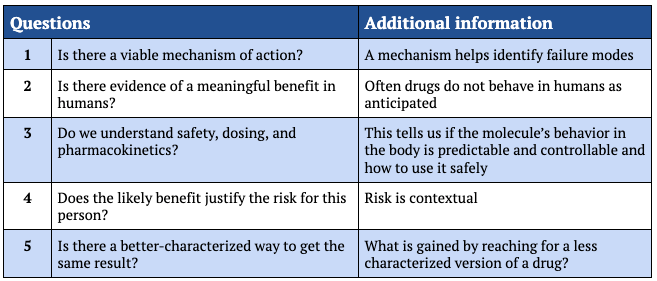
Figure 1. Framework for gathering information needed to evaluate any peptide (or drug).
A three-tier system for classifying the scientific evidence behind peptides [A: 10:00, V: 8:23]
Based on the answers to these questions, how would you then start to classify or bucket the level of evidence for various peptides?
- In the original AMA, we talked about peptides being in 4 different buckets
- Since then, Peter has paid attention to how he has been speaking with patients about this, and he has defaulted to using 3 buckets (that’s how he will talk about it here)
Bucket 1: scientifically unsupported
- There is absolutely no validated mechanism
- Either we have no idea where it binds, or the proposed mechanism is vague, or contraindicated by what we know
- There’s little or no credible human evidence that these work
- And the claims tend to drift over time without any clinical progress to justify them
Bucket 2: it’s biologically plausible that they might work, but it’s not supported by any human clinical evidence
- This means that there may actually be a mechanism of action that’s credible
- And that the drug could have even worked in animal studies
- Perhaps even does something real at the level of human biology
But there’s little evidence that it improves an outcome—and that’s what matters in humans
- Improving an outcome is especially important for off-label goals that people are typically using these things for
- These are often drugs where development has stalled or even halted because it didn’t work well enough
- It wasn’t safe enough
- Or perhaps it got beaten by a better drug in the pipeline
Bucket 3: scientifically legitimate molecules
- This makes it tricky because this is also the category where people often confuse a legitimate molecule with a legitimate product (more on that later)
These are the peptides that most likely are going to produce some biologically meaningful effect
- One subtle but important point is that a drug isn’t simply evidence-based
- It’s evidence-based for a particular dose, route of administration, patient population, indication, and clinical endpoint
- So evidence doesn’t automatically travel with the molecule; it belongs to a very specific clinical question
Peter explains, “A drug shown to work in one disease, one population, or one dose cannot obviously be assumed to work equally well when any of those conditions change.”
Being in bucket 3 is NOT an endorsement
- There’s much more nuance to this
- It means that the underlying molecule has the strongest scientific footing of the 3
- But it doesn’t automatically mean it’s safe
- Or that the off-label use helps for the indication that you might want to take it for
- Or even that the risk-benefit calculation works for you, especially if you purchase it on the gray market
The practical conclusions differ by bucket
- In bucket 1, there is not enough scientific foundation to justify use
- In bucket 2, the biology may be real, but the claimed clinical benefit has NOT been demonstrated
- Or the potential harm that arises from using it would probably lead someone (like a company that’s developing it) to abandon it
- The development history on many of the peptides in this bucket should probably temper your enthusiasm
- In bucket 3, the most reasonable approach is to use the product with the strongest characterization and oversight
- You should be clear about what, if anything, you’re gaining by using a less characterized version of that peptide
- And what risks you’re accepting or willing to accept by substituting it for the more well-studied drug (more details later)
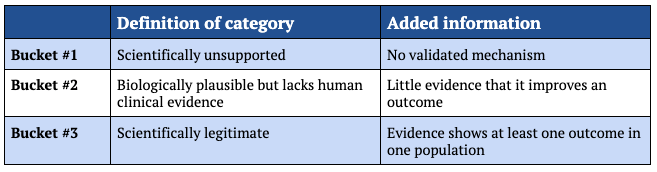
Figure 2. Classification of the level of evidence for a peptide, from least to most.
Evaluating BPC-157: unclear mechanisms, absent human evidence, and unknown risks [A: 14:00, V: 12:35]
- What would be most helpful is to run this framework with an actual example
- BPC-157 is one of the most prominent peptides
Talk about what BPC-157 is and where you land the framework that was just discussed
- BPC-157 is the case study and poster child for everything that should make you skeptical of a peptide
- But Peter is not asking you to accept this just because he’s said it
- The whole point of the framework is to make the case step by step.
Question #1: Is there a clear biologically viable mechanism?
- No
- BPC-157 is described as a fragment of naturally occurring gastric body protection compound, but its origin story is unusually murky
- The alleged parent protein has never been fully characterized
- And BPC-157 itself doesn’t clearly match any known human gastrointestinal peptide or any other human protein
- When asked why the full protein sequence has never been published, the scientist who discovered BPC-157 said, “If you have your own child, you want it to be yours forever.”
- He has also refused to disclose the screening method used to originally identify the compound
- So this isn’t just a case of missing data
- The details appear to be deliberately withheld
- This is basically the scientific equivalent of, “Trust me, bro.”
- Several mechanisms have been proposed
- Particularly effects involving VEGF (vascular endothelial growth factor), angiogenesis, nitric oxide, and neurotransmitter systems
- But none of those have been established in humans
- And we do not know the receptor or target through which the drug principally operates
- Peter has heard people defend BPC-157 as a peptide without a receptor, leaning on the fact that some drugs genuinely do not work through receptors
- That part is true, but that is the sleight of hand
- You see lacking a receptor is different from lacking a mechanism
- A molecule can act without a classic receptor and still have a well-defined mechanism of action
Most molecules that end up showing clinical benefit do have a mechanism of action; with BPC-157, we do not have a clear mechanism
Question #2: Is there evidence of meaningful benefit in humans?
- No
- Nearly everything we “know,” comes from animal models
- The positive literature is overwhelmingly preclinical
- More than 80% of the published work comes from one academic group
- And researchers associated with that work have IP and commercial interests connected to the molecule
- That does not automatically make the findings false, but it should raise the bar for independent replication
- And that replication is astonishingly thin
Despite approximately 3 decades of claims, there are no published peer-reviewed human randomized trials demonstrating that BPC-157 accelerates healing
“Three decades, dozens of fantastical benefits, and not a single human RCT.”‒ Peter Attia
Question #3: Do we understand safety, dosing and pharmacokinetics?
- No on all 3
- Human pharmacokinetics and bioavailability are unknown
- So, commonly promoted dosing protocols are essentially guesses
- We do not know how much reaches circulation, how long it stays active in humans, what dose works for what indication, and what the long-term risks are, or what would even need to be monitored
The absence of an obvious safety signal is not evidence of safety
- Phase 1 clinical trials to pick up safety signals haven’t been run
- Long-term and repeated dose effects have not been adequately studied
- A practical safety framework should tell us how to use the molecule safety, what to watch for, and how to intervene if something goes wrong
- BPC-157 doesn’t give us any of that
Question #4: Does the likely benefit justify the risk for this person?
- The irony: if you actually believe the proposed mechanisms, you should be worried more and not less
Peter points out, “Proangiogenic VEGF and nitric oxide signaling are exactly the kinds of pathways that potentiate tumor biology, abnormal vascular growth and tissue remodeling.”
- And of course that doesn’t prove that BPC-157 causes cancer (and Peter’s not saying that)
- But if proponents claim that it meaningfully stimulates healing through those pathways, they should also take seriously the possibility of stimulating biology you may not want overstimulated
The trade-off is poor
- An unquantified benefit for injury, recovery, pain, inflammation, gut health, or performance, against an incompletely characterized molecule with unknown dosing, unknown human exposure, limited long-term safety data, and biologically plausible cancer related concerns
- That’s just not a trait Peter thinks most rational individuals would make
Question #5: Is there a better characterized way to get the same result?
- For BPC-157, you do not need a perfect named alternative to reject it
- You’re being asked to take an uncharacterized molecule on faith
- For tendon injuries, ligament injuries, pain, inflammation, gut symptoms, or recovery, there are better characterized ways to evaluate and manage the specific underlying problem
- They may be less exciting, slower, less marketable, but they come with clearer dosing, clearer risks, clearer monitoring, and a stronger evidentiary foundation
BPC-157 is not being chosen because it has demonstrated superior human outcomes. It’s being chosen because the story is compelling.
Where does BPC-157 land?
- It lands very clearly in bucket #1—there is not enough scientific foundation to justify its use
Why BPC-157’s expanding claims do not indicate a broad mechanism [A: 20:45, V: 19:13]
You talked about how we don’t know the mechanism for this peptide. Is there a chance based on the general claims around BPC-157, that it has a broad mechanism?
- You can never be absolute in biology—it’s not mathematics
- But Peter would say the answer to that question is no
The chance of what you described is about as close to zero as it gets
- A drug can have broad effects, but only when it hits a fundamental pathway and it earns that breadth
For example, let’s look at GLP-1 agonists
- They didn’t arrive trying to fix diabetes, obesity, heart disease, kidney disease, fatty liver, sleep apnea, and neurodegenerative disease all in one shot
- They got 1 indication, proved it in rigorous trials, and then over years as real evidence came in
- Then they earned additional ones
BPC-157 has done the exact opposite
- They purported benefits and have expanded, while the first claim was never nailed down
- Wound healing became tendons, then ligaments, then muscle, then gut disease
- Then inflammation, pain, performance, recovery, even multiple sclerosis
- That’s not a new drug earning indications
“That’s a peptide getting repositioned across every therapeutic area imaginable, with nothing rigorous to show for a single human disorder.”‒ Peter Attia
The part that bothers Peter more than the missing data
- Human randomized trials are possible, yet they’re not happening
- Or, they’re happening and the full results are never published
Someone is choosing not to look, or choosing not to tell you what they found
Peter explains, “There’s a pattern here and it’s a reliable one. Legitimate drug development narrows uncertainty over time. Bad science (or no science) expands its claims instead.”
- And that’s a very important distinction
- BPC-157 has been on the second track for decades
- We still don’t know its primary target
- We still don’t have a convincing human trial
- We still don’t know the dose or basic pharmacokinetics in humans
- And somehow the list of things it treats keeps growing
- This is not a signature of a broad mechanism
That’s the signature of a great marketing campaign based on hype and hope
- At best, nobody has bothered to actually rigorously test this thing
- At worst, somebody did, and didn’t like what they found
CJC-1295: biological activity versus meaningful clinical benefit [A: 23:30, V: 21:51]
How do you feel about a peptide with plausible biology and real biological activity?
Even if the clinical outcome evidence might still be limited, does those things change how you feel about it?
- Peter calibrates his enthusiasm to the strength of the evidence, and usually he’s NOT overly enthusiastic about peptides in this category
CJC-1295 is a useful example
- It is both biologically plausible and biologically active
- Also, for what it’s worth, it’s probably one of the 3 or 4 peptides Peter gets asked about the most
- Again, we’ve covered this in much greater detail in the previous AMA if you want to go back and get really into the weeds of the history of this peptide and all those other things
⇒ CJC-1295 can raise growth hormone and IGF-1
“One of the biggest mistakes people make is assuming that’s because a molecule changes biology, therefore it’s going to improve health.”‒ Peter Attia
- Almost every drug we study changes biology in some way
- If it binds to a receptor, alters a signaling pathway, raises one biomarker, lowers another, or changes the expression of a protein, that’s changing biology
- That’s not the relevant question
The question is whether or not those biological changes translate into outcomes that actually matter to patients
- Better function, more strength, faster healing, less pain, fewer heart attacks, longer life, or measurable improvement in quality of life
- That distinction matters a lot for CJC-1295, because its appeal rests on stimulating the growth hormone pathway
- And we already have a much more direct way to interrogate that pathway, giving growth hormone itself
- In people who are truly growth hormone deficient, replacement can matter
- In a few specific clinical conditions (such as HIV-associated lipodystrophy), targeting this pathway can have an incredible role
But in growth hormone replete adults (i.e. virtually everybody listening to this podcast, including Peter), the results have been surprisingly underwhelming
- Growth hormone can produce modest changes in body composition and increases in so-called lean body mass
- But lean body mass, as defined in these terms, is actually a very blunt metric
- A meaningful portion of that increase can actually reflect water retention and other non-contractile tissue rather than functional skeletal muscle
- More importantly, when you look at the outcomes people actually care about—strength, physical performance, recovery, functional capacity, and quality of life—the benefits are generally much smaller than most people imagine, and are often absent altogether
- That might be the strongest argument against using something like CJC-1295
- We already know what happens when we push this pathway more directly
Peter explains, “If directly administering growth hormone has largely failed to produce meaningful functional benefits in growth hormone-replete adults, the burden of proof is high for claiming that an indirect growth hormone-releasing hormone will produce dramatically different results.”
- This issue is not whether CJC-1295 is biologically active, it is
- The issue is whether that activity translates into a meaningful human benefit at a dose we understand, with risks worth accepting
- For CJC-1295, that case has yet to be made
Why testimonials about peptide benefits cannot establish the effectiveness of peptides [A: 27:30, V: 25:39]
How do you respond to people who say, “Yes, but what about all these people that these peptides helped?”?
- Peter handles this question with empathy, because these stories are sincere and he hears them constantly
- He’s hearing them both directly and indirectly from patients who are sharing stories of their friends or family members
- But a testimonial describes what happened after someone took a drug
- It can’t tell you what would’ve happened without it
- It also fails to often reflect what else was being taken or done with that drug
- And those counterfactuals are the whole ballgame
Start with the biology of injuries
- Musculoskeletal injuries tend to improve on their own, and they fluctuate a lot
- People almost always start a peptide when they’re at their worst—which is exactly when you’d expect things to get better anyway, drug or no drug
- That’s simply regression to the mean
- This is a well-documented phenomenon in human physiology
- Then, layer on everything else people are doing at the same time
- They’re probably resting, modifying activity, doing physical therapy, perhaps taking anti-inflammatory drugs, sleeping better, eating better, training smarter, and perhaps even taking anabolic agents
“BPC-157, CJC-1295, or some other peptide stack, is just one part of a sea of variables, and yet it always seems to be the thing that gets the credit.”‒ Peter Attia
One brief example
- Peter’s friend who wanted to start peptides said another friend of his was taking it and it was having a remarkable effect
- He shared the pre and post photos of his friend before and after he was on his peptide stack
- And there is no denying these photos, there was an enormous improvement
- Peter replied, “This looks amazing. There’s no denying it. What else was he doing?”
- He also also started exercising, and he was taking tirzepatide, and he changed his diet (because of the tirzepatide), and he was taking testosterone
It was amazing to Peter that this otherwise very intelligent person was attributing the benefit to the “Wolverine stack” of peptides that this patient was taking
Let’s talk about the placebo effect
- The placebo effect is genuinely powerful for subjective outcomes
- Like pain, and how recovered you feel, or how much energy you have
- Nobody injected one shoulder with the drug and then the other shoulder with saline in a blinded way
- That seems to not happen
- That’s what needs to happen to answer this question
Then you add reporting bias
- The person who got better posts about it
- The person who saw nothing quietly moves on
Peter’s takeaway: Anecdotes are great. They can generate hypotheses, but they can’t tell you the size of an effect, who benefits, the right dose, or how rare they are. Nevermind what the harms are.
The placebo effect, and the importance of controlled trials for evaluating peptides [A: 31:00, V: 29:05]
Can we talk a little more about the placebo effect—that’s something that is applicable even beyond peptides
How much of the proposed effects could (or should) be attributed to the placebo effect?
- Some of it could be, but the point requires precision
- Many peptides come with a powerful story around them
- That’s true for something like retatrutide and it’s also true for something like BPC-157
- The difference is that for some peptides, controlled human trials help separate the effect of the molecule from the expectations surrounding it
- For others—like BPC-157—the story is powerful and the human outcome data are thin
Even when a peptide is biologically active, the perceived benefit can still be shaped by expectation, behavioral change, and the ritual of treatment, along with the broader story attached to it
- And that matters because peptides are rarely presented neutrally
- They are introduced as regenerative molecules and something that succeeds where conventional medicine failed—it’s a great story
- By the time many people take them, they have already absorbed a powerful narrative about what it is supposed to do
- Peptides, as a broad category, have almost every feature that can amplify that response
- Social media testimonials, authority from a clinician or peptide clinic, real cost, subcutaneous injection—which just somehow feels more official and more serious, and the feeling of using something advanced and biologically targeted
- That is potentially a very persuasive story
Pain is probably the cleanest example
- Placebo response in pain trials can be large, because pain is shaped by attention, expectation, threat perception, sleep, mood, and context
- If someone believes they are using a powerful analgesic compound, especially if they have to inject it, that perceived effect can be very real
Peter brings up randomized controlled trials (RCT), not because he’s trying to be an academic gatekeeper
- He is trying to understand the answer to the attribution question (among other things)
- You may know someone who claims to have improved by taking a peptide
The RCT tells you how much of that improvement belongs to the molecule after you account for the story ritual attention and expectation
We see this even with drugs that clearly work
- In the STEP 1 study, semaglutide produced far more weight loss than placebo
- So the drug effect was real
- But the placebo group, who believed that it was likely they were getting a weight loss drug, still lost weight
- That does not mean the placebo was fake and it was an actual drug—it wasn’t
- It means trial context, lifestyle support, adherence expectation, and follow-up, can move outcomes
- The RCT is there to tell you how much additional benefit belongs to the drug—that’s the key distinction
- For a peptide with strong randomized human trials, we can say, yes, there is a story around it, and the molecule adds this much measurable benefit beyond that story
“For something like BPC-157 and other gray market peptides, the controlled human evidence that separates the molecule from the mythology is curiously absent.”‒ Peter Attia
- When the story is powerful and the evidence is thin, anecdotes become very easy to over-interpret. Controlled human trials are how you separate the drug from the drama that surrounds it.
What FDA approval provides when evaluating peptide safety and effectiveness [A: 34:45, V: 32:58]
Where does the FDA fit into all of this?
How do you think about FDA approval when thinking about how you would use (or not use) peptides?
- Whether you love the FDA or hate the FDA is beside the point
- The better question is: What information do you gain, and what information do you give up when you choose a drug that has completed formal development with the FDA versus one that hasn’t?
What completing formal drug development gives you is much more information
This information allows you to make evidence-informed decisions
- It tells you that the actual drug has been shown to produce a defined benefit in a defined human population
- It gives you a study dose, a formulation, a route of administration and a pharmacokinetic profile
- It gives you a characterized safety profile, known contraindications, known drug interactions, and monitoring requirements
- It also gives you manufacturing standards around identity, potency, purity, stability, sterility, and lot-to-lot consistency
- It’s a lot of stuff here
- With approved drugs, those questions are at least formally addressed
Peter emphasizes, “With many non-approved peptides, [these questions] they are virtually all unanswered.”
An important point: FDA approval does NOT automatically mean the drug is safe
- Approved drugs can still cause harm
- Some are later restricted, relabeled, or even pulled from the market
- That’s part of what a monitored drug system is supposed to do
- Peter can think of countless examples of drugs that get pulled off the market when post-market surveillance either demonstrates the efficacy is not large enough, or the side effects or unwanted off-target consequences of the drug are too great
- This is a reason that approval is indication specific
- A drug may have a reasonable risk-benefit profile in one population, but a very poor one in another
One of the very popular peptides, SS-31 is a good example of this
- It may make sense to approve a mitochondrial targeting peptide in people with Barth syndrome (which is a severe life-limiting mitochondrial disease) based on limited evidence
That does NOT mean we have enough information to make an informed risk-benefit calculation for a healthy person taking it for energy, performance, or longevity
“A risk that is acceptable when the alternative is early death, may be completely unacceptable when the expected benefit is speculative.”‒ Peter Attia
So what do you lose by sticking with approved drugs?
- Well, you lose early access
- You may lose cheaper options
- You lose access to compounds with marginal benefit that would not survive a formal development process
Peter thinks what you gain is much more important
- Evidence, dose clarity, safety characterizations, manufacturing control, and post-market surveillance
And that’s why he would have a hard time recommending non-approved peptides
- Not because FDA approval is infallible and final
- But because bypassing that system usually means giving up the information and oversight that you would need to make a defensible risk-benefit decision for yourself
Why prescriptions from doctors, compounding pharmacies, and third-party testing do not validate unapproved peptides [A: 38:30, V: 36:48]
Based on what you just said, if someone gets an unimproved peptide from either a doctor, a compounding pharmacy, or a vendor that has third-party testing, does that solve any of these problems?
- It solves some of the problems, but NOT most of them
- A prescription tells you that a licensed clinician facilitated access, but it does not create any of the missing evidence for the molecule
- Physician involvement may improve counseling, injection techniques, screening, monitoring (which can matter)
- It doesn’t prove anything about the peptides working, or that the promoted dose is valid, or that the product has the same properties as the studied version of the pharmaceutical if you’re using something that mirrors that
- The same is true for compounding pharmacies
- A compounded version of a peptide does not automatically mean it has the same safety and efficacy of the studied version
- The oversight and sourcing may be better from products purchased online and labeled for research purposes only—and those differences may matter—but the central issue remains
- It does not automatically inherit the clinical evidence, manufacturing controls, or monitoring of a regulated product
- Similarly, third-party testing can help, but it only answers part of the question
- HPLC, or mass spectrometry, may confirm the identity, approximate amount, and chemical purity of a sampled vial (and that’s very useful information)
- But it does not say anything about sterility or lot-to-lot consistency
“Peptides as a class can be genuinely powerful, which is a reason to be more careful with them, not less. We can’t normalize treating real drugs carelessly.”‒ Peter Attia
- People are often treating peptides like an over-the-counter dietary supplement, but these can be potent injectable molecules
- And the more a drug can do to the body, the more care needs to be given to our thoughts around it
Peter’s answer is: a compounding pharmacy, or a third-party test, may reduce some of the risks of using gray market peptides, but they don’t solve the fundamental problems
Approved peptides sold on the gray market: why evidence for an approved peptide does not automatically extend to gray-market versions [A: 40:45, V: 39:06]
What if the gray market peptide is a version of a drug that already has good evidence?
For example, how do you think about gray market GLP-1 agonists?
- One of the biggest misconceptions people have about these so-called “research only” or “gray market” peptides, is that they assume the molecule is the drug—but it’s not
- The molecule is only the starting point
- This is NOT an obvious point
Take retatrutide as an example
- Retatrutide is not just the amino acid sequence
- Anyone trying to turn that sequence into a reproducible pharmaceutical has to solve an enormous number of engineering and manufacturing problems that have nothing to do with whether the molecule binds its receptor
- Can the molecule be manufactured reproducibly at scale?
- Can it be purified consistently?
- Can you demonstrate analytically that every batch contains the same molecule at the same concentration and purity?
- Those are NOT bureaucratic details; they are fundamental chemical, engineering, and manufacturing questions
- A pharmaceutical is not simply a molecular structure
- It’s the successful solution to each of those problems
“That’s why I think it’s a mistake to assume that because two vials claim to contain the same amino acid sequence, they’re equivalent. They may not be.”‒ Peter Attia
- Even if the sequence is correct, the manufacturing process may differ in ways that are analytically important, and potentially clinically important
When clinical trials show that a drug works
- They are not validating an amino acid sequence in the abstract
- They are validating a specific product, manufactured under specific processes, with a specific formulation and specific physiochemical characteristics
The evidence applies to the product that was actually studied, not automatically to every preparation that shares the same amino acid sequence
- This is not mainly a regulatory argument
- It’s an acknowledgement that chemistry, manufacturing, and analytical science, are inseparable from pharmacology
- If you change the product, you may also change the properties of the drug
Addressing the claim that pharmaceutical companies ignore effective natural peptides because they cannot be patented [A: 43:00, V: 41:26]
How do you think about the statement: pharmaceutical companies can ignore these peptides because the natural peptides can’t be patented
- There’s only partial truth to that
- The kernel of truth is that you can’t patent a product of nature in its raw form, but patent law leaves enormous room for monetization—and this is the part people miss
Almost none of these peptides exist in nature in the form that’s actually used
- Companies routinely patent modified analogs, new sequences, salts, conjugates, delivery systems, manufacturing processes, even specific dosing regimens and uses
- For example, Rapamycin, Metformin, and the statins all began as natural molecules and were all eminently patentable once modified
- Even BPC-157 has patents on all its salts and production methods
Peter points out, “The pharmaceutical industry is many things, but indifferent to money is not one of them.”
Lack of pharmaceutical development doesn’t prove a peptide doesn’t work
A reason to be skeptical
- Decades of promotion without convincing human efficacy data, despite obvious commercial interest, should lower your confidence that the claimed effects are as dramatic as advertised
- We’ve already seen exactly this dynamic play out
- A whole field of companies are racing to develop drugs built on synthetic variations of the same GLP-1 peptide biology—a drug based on a peptide found in nature
So, if these gray market peptides truly delivered on their claims, that same pharmaceutical industry would be racing to develop them too
- And the conspicuous absence of that race should tell you what you need to know
Something a lot of people don’t realize is that many of these wellness peptides are drugs that started in the pharmaceutical pipeline but stopped being pursued for one reason or another
- Inadequate efficacy, safety concerns, poor pharmacokinetics, a failure to outperform existing treatments, competition from a better drug, or simply the lack of commercially available indication
- The cleanest illustration of this is CJC-1295 versus tesamorelin
- Same underlying biology developed around the same time
- CJC-1295 reached phase 2 but was abandoned
- Tesamorelin advanced to phase 3 and received full FDA approval
- Tesamorelin is actually closer to the native molecule than CJC-1295
- Its success has nothing to do with being more patentable or more natural
- It succeeded because the data were better
The picture people have where peptides live in some world outside of the pharmaceutical industry is exactly backwards
- These molecules came from inside the industry, very often
- CJC-1295 is actually named after the pharma company that abandoned it, ConjuChem
The gray market isn’t an alternative to pharma; it’s the salvage yard for the drugs pharma tested and walked away from
The promise of peptide science, and the risks of the gray-market wellness industry [A: 46:30, V: 44:55]
If a reasonable person is trying to make sense of all this, what should they take away about today’s peptide landscape?
Peter shares, “The skepticism I’ve expressed here is aimed at the gray market wellness ecosystem, not at peptide science.”
- Peptides are a legitimate and powerful class of drugs
- Insulin and GLP-1s are the obvious examples of what is possible when you understand the biology, dosing, manufacturing, benefits and risks
- The pipeline also supports this
- Roughly 100 peptide drugs are already approved
- About 150 more are in clinical trials
- And 600 to 700 more are in preclinical development
- The areas with the most genuine near term promise are: metabolism, infectious disease, diagnostics, and cancer
- Where a peptide’s specificity can be a major advantage
“The irony is that the uses most aggressively promoted in the wellness world, brain boosting, recovery, and tissue repair, are often the areas where peptides face the steepest scientific climb.”‒ Peter Attia
- The blood-brain barrier makes central nervous system effects very difficult
- Tissue repair is biologically complex
- And broad claims about healing regeneration or optimization are much harder to validate than claims about a defined disease
The promise is real; it’s just not evenly distributed
- Much of what people encounter today in the gray market peptide world falls well short of that promise
- Some compounds are biologically unconvincing
- Some were clinically abandoned
- Some are investigational drugs being used before development is complete
- Others are unauthorized versions of real pharmaceuticals, stripped of the manufacturing controls, quality assurance, and surveillance, that made the original product interpretable
- For a generally healthy person, that means the bar should be very high—higher than it would be for someone with a severe or untreatable disease
- If the expected benefit is modest or speculative, and the product quality is uncertain, the risk-benefit calculation changes pretty quickly
- A risk that may be reasonable in a life-limiting disease can be unreasonable when the goal is better energy, or faster recovery, or some vague promise of longevity
Why peptide claims must be falsifiable and why evidence should precede widespread use rather than be expected to catch up later [A: 49:00, V: 47:17]
What would you say to someone who is still skeptical around your stance on peptides?
The test Peter would apply
- What observation would prove a given peptide claim wrong?
- If the answer is none (if every disappointing outcome gets explained away by dose, timing, supplier, stacking), that’s not a scientific claim anymore
- A hypothesis has to be falsifiable, or it can’t be corrected by evidence
- That standard is exactly what conventional drug development enforces
- Show efficacy in humans, define who benefits, characterize dose in pharmacokinetics, understand the risks, then decide how it should be used
- Adoption follows evidence
Much of the wellness peptide space has run that order completely backwards
- Widespread use has preceded the evidence on the assumption that evidence will eventually catch up
- It hasn’t done so for the gray market peptides
Peter explains, “If these compounds worked as claimed, the science should be getting more precise over time: better trials, narrower indications, clearer dosing.”
- Instead, for many of them, the list of claims keeps growing, while the foundational questions, the one that would allow you to make truly informed decisions remains open
Yes, the pharmaceutical industry has made its share of egregious mistakes
- But those mistakes happen inside a process built to weed out failures
- 90-95% of drugs entering clinical trials never reach the market
- Done in by a lack of efficacy, safety concerns, poor pharmacokinetics, or weak commercial prospects
- You can criticize the industry for plenty of things, but failure is built into the model, and a lot of fails—including some of the most popular gray market peptides
The core issue
- Is not that peptides work or don’t work
- But that a claim which can’t fail isn’t a scientific claim
- And a field that expands rather than narrows it claims over time is moving in the wrong direction
- That’s not evidence-informed decision-making, it’s marketing
- And hope deserves a lot more than marketing
Nick doubts this will be our last conversation on peptides
Peter asks, “You don’t share my optimism that this is the last time we have to do a podcast on peptides?”
- No, Nick thinks we’ll come back to it in the future
Selected Links / Related Material
Original AMA on peptides: #387 – AMA #83: Peptides—evaluating the science, safety, and hype in a rapidly growing field (April 13, 2026)