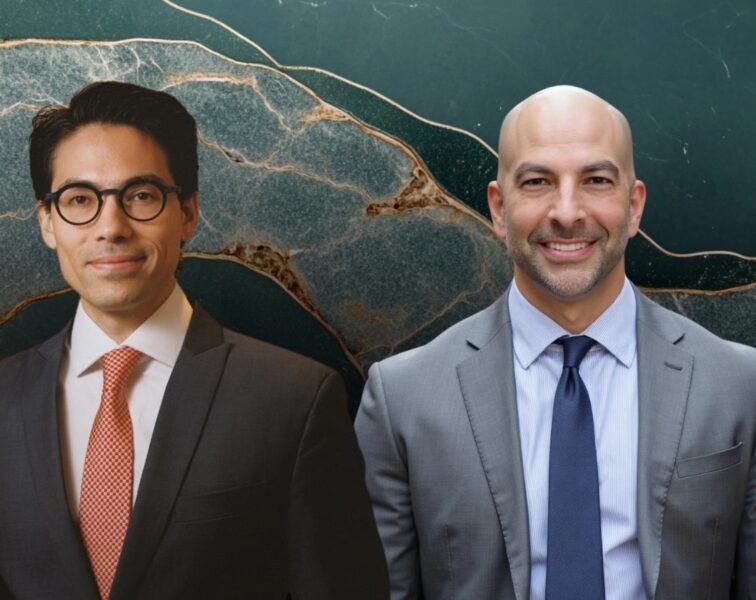
Tanuj Nakra and Suzan Obagi, two leading experts in aesthetic medicine, join Peter to explore the science of facial aging and skin health as well as the responsibilities physicians face in the world of cosmetic procedures. In this episode, they examine the biological and hormonal drivers of facial aging, the evolutionary and psychological foundations of attractiveness, and the impact of modern media on beauty standards. They discuss the rise in cosmetic procedures among adolescents and the ethical responsibilities of physicians in these cases. The conversation then shifts to a practical, evidence-based guide to skin health—covering the use of mineral sunscreens, retinoids, vitamin C, and tailored skincare routines, as well as the management of acne and the psychology behind aesthetic consultations. The episode culminates in a candid, personal assessment of Peter’s own face, offering a revealing look at what aesthetic medicine can achieve and how to think critically about pursuing it.
Subscribe on: APPLE PODCASTS | SPOTIFY | RSS | OVERCAST

We discuss:
- Tanuj’s and Suzan’s training and expertise, and the evolving field of aesthetic medicine [4:00];
- The biology of the aging face [10:45];
- Why facial fat atrophies with age while body fat tends to accumulate [17:00];
- How chronic stress accelerates facial aging [20:30];
- The evolutionary biology of beauty, and how modern lifestyle, culture, and medicine interact with these ancient aesthetic instincts [25:30];
- How social media and influencers have rapidly shifted aesthetic trends toward exaggerated features and unrealistic beauty standards [36:45];
- The ethical challenges, financial incentives, and social pressures shaping modern aesthetic medicine [42:00];
- The concerning trend of teenagers seeking cosmetic enhancements: the ethical and cultural impact of early beauty pressure [51:45];
- Protecting the skin: UV damage and sunscreen recommendations [58:15];
- Strategies for minimizing skin aging: retinoids, vitamin C, and evidence-based application methods [1:09:00];
- Effective daily skincare routine: cleansing, antioxidants, retinoids, moisturization, and more [1:18:45];
- The playbook for managing acne [1:31:00];
- The 4 changes of aging and the complexities of aesthetic consultations including the anatomical, psychological, and ethical factors physicians must navigate [1:39:00];
- The 5 R’s of rejuvenation [1:50:15];
- A facial aging analysis and cosmetic strategy using Peter’s face as a real-time case study [1:53:00];
- The decision-making process between fat grafting and dermal fillers for facial rejuvenation [1:56:30];
- How self-image, eye aesthetics, and fleeting photos drive the desire for cosmetic enhancement [2:01:45];
- Advice for wrinkles, causes of dark circles under the eyes, and the importance of facial symmetry [2:05:45];
- Considerations that shape clinical decision making around fat grafting and other procedures to address the eye area [2:11:00];
- The evolution of facial cosmetic surgery techniques, the serious risks involved, and how physician skill and procedure selection greatly impact outcomes [2:21:30];
- How patients can make informed and safe choices when selecting a cosmetic surgeon [2:27:15];
- A comparison of ablative versus non-ablative skin resurfacing treatments, laser vs. peels, and more [2:38:45];
- How treatments are chosen and customized based on patient-specific factors [2:48:00];
- The lifelong human desire to align physical appearance with self-identity [2:52:45]; and
- More.
Show Notes
Tanuj’s and Suzan’s training and expertise, and the evolving field of aesthetic medicine [4:00]
- This is a topic that Peter gets asked a lot about and one that he knows even less than the general public about
- It’s super helpful to have not one but two experts on this topic because they each have a different specialty
Tell us a little bit about your training, your background, and what you focus on
Dr. Tanuj Nakra
- Tanuj’s core specialty is oculofacial plastic surgery
- He trained mostly at UCLA in eye surgery and in facial surgery
- His original background is ophthalmology
- Then he did fellowships in ophthalmic plastic surgery and another fellowship in facial cosmetic surgery
- His practice is limited to eye and face plastic surgery
- That ranges from reconstruction of children, cancer reconstruction for elderly, and all the cosmetic surgeries that we can perform on the face
- This includes the nose and neck
- Tanuj moved to Austin 16 years ago after training at UCLA and joined a large group here [TOC Eye and Face], and he is also faculty of the Dell Medical School
- He is actively involved with academics, teaching, and residents
- The practice has two fellowship programs
“It’s a real pleasure to be involved in academics because it’s the cutting edge of science, and we like to perform clinical research and in the academic community (which is how I know Suzan) there’s a lot of collaboration amongst specialties, and we have an opportunity to dialogue and further the specialty that we care so much about.”‒ Tanuj Nakra
Dr. Suzan Obagi
- Suzan is a dermatologist by training, she did a fellowship in cosmetic surgery
- She is in academic medicine at the University of Pittsburgh
- She’s been there about 24 years ‒ she’s gotten to see the evolution of this entire field
- They used to do surgeries and a few collagen injections
- Now they have a plethora of tools at their disposal
- She trains residents, medical students, and visiting physicians from all over the world
- She loves the multi-specialty collaboration
- Both guests belong to the American Academy of Cosmetic Surgery, and they have a different approach from different specialists, sometimes even on the same procedure
- Suzan’s practice focuses on everything with regards to skin rejuvenation, peels, lasers
- She does a lot of fat grafting
- She does body liposuction, mini face lifts, eye lifts
“Everything when it comes to the face is about really enhancing the appearance of the skin first, because my feeling is that’s the most important thing that everyone sees.”‒ Suzan Obagi
- When a patient comes in who has not had anything done or doesn’t know about the field, Suzan actually likes that because she can take that opportunity to really educate them and pick the right things for them
Peter jokes, “I appreciate you noticing I’ve had nothing done.”
Before the podcast, they were discussing the strategy Peter has taken towards his appearance
- There is something about this field of medicine that Peter has such a block in his brain to understanding
- He has met Tanuj before: Tanuj helped him with a scar
- Peter’s friend Brett Kotlus [guest on episode #13] introduced them
- Peter face planted one morning due to some hypotension and sustained a pretty nice scar that for the most part is largely invisible today (probably in part because his face is leather to begin with)
- In part that’s because he did some 5-FU microabrasion along with a whole bunch of stuff, and Peter was actually pretty diligent about staying out of the sun for the period of time afterwards
- He’s also done a Botox treatment, which certainly reduced the wrinkles (obviously it’s long gone)
- Peter has taken a strategy towards his appearance that is probably illogical: he ignores it because he doesn’t understand it
- He focuses on things he understands
Peter adds, “I would view it as an enormous win of this podcast if in a few hours, I decided to do something that was sustainable and going to help me look a little better at 62 than I should look. (I’m 52 today).”
- Peter looked at a picture of himself 10 years ago before this podcast, and what a difference 10 years has made
- He looks so much worse today
- That’s probably not uncommon and would guess that 42 to 52 is a big reduction in appearance
- It made him realize that the reduction in the next 10 years will be greater if he doesn’t do something proactive
- Peter admits, “I can’t even bring myself to wash my face before bed.”
- Which his wife finds disgusting
- Tanuj and Suzan have their work cut out for them because if Peter can be educated on this, they can change the world
The biology of the aging face [10:45]
- We’re going to limit our discussion to the neck up
Why did Peter look better at 42 than 52?
- That’s exactly how Suzan’s patients come in; they say, “I feel like I look tired. I don’t know exactly what’s going on…”
- She uses diagrams of the face of someone who’s 20 and someone who’s in their late 60s to explain the changes
- If you look at a diagram of the face with the skin peeled off, you’ll see about 11 different fat compartments in the youthful face [shown in the figure below]
- On each side of the face that are plump, they’re robust, they’re giving volume, and they’re giving a padding between the skin and the muscle and the underlying bones
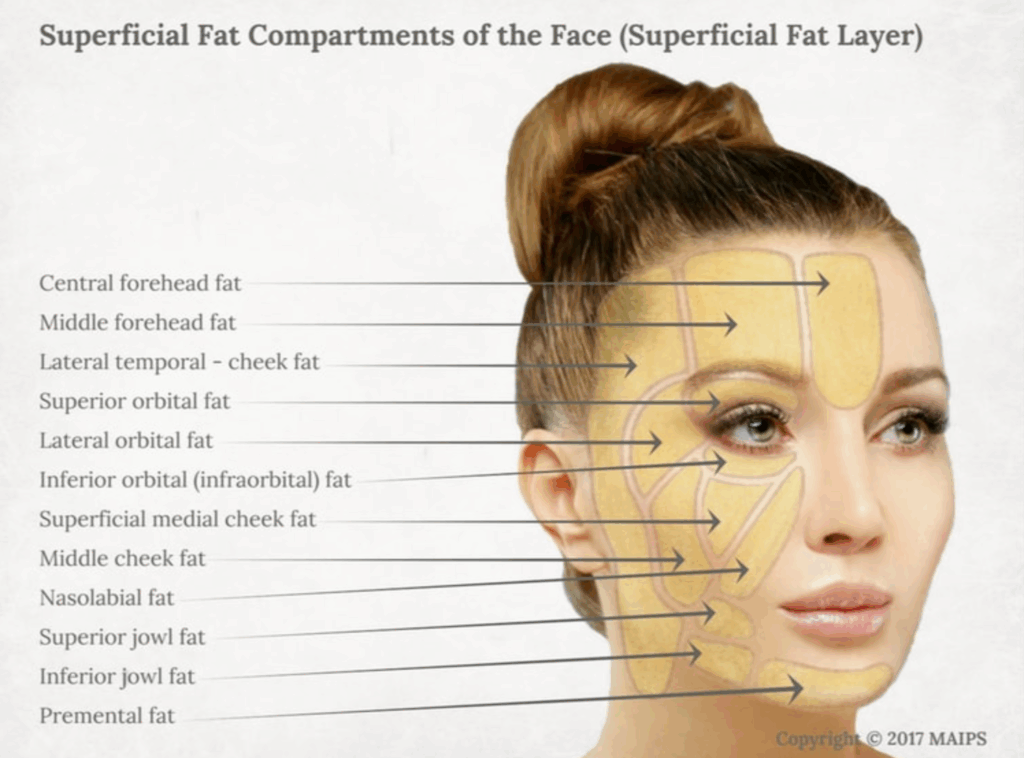
Figure 1. Superficial fat compartments of the face. Image credit: MAIPS
- Then you look at someone who’s in their late 60s, and you peel the skin away, and you see a dramatic atrophy in all those fat pads
- A few might increase in size, but the vast majority undergo atrophy
{end of show notes preview}
Would you like access to extensive show notes and references for this podcast (and more)?
Check out this post to see an example of what the substantial show notes look like. Become a member today to get access.
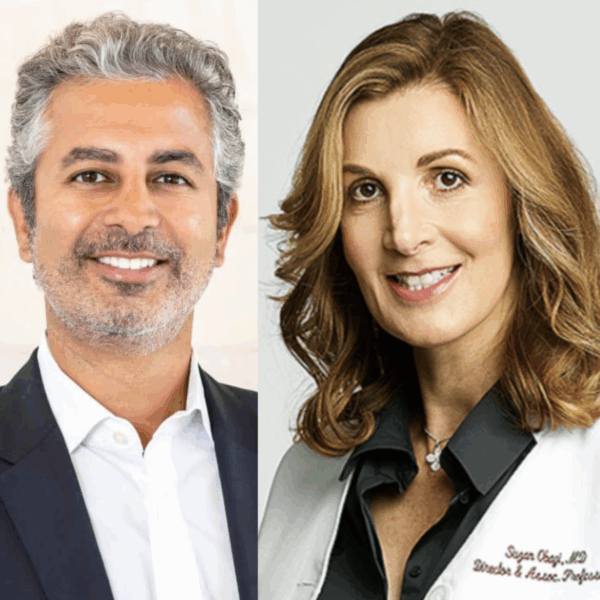
Tanuj Nakra, M.D. & Suzan Obagi, M.D.
Tanuj Nakra earned his bachelor’s degree in biology, psychology, and fine arts from Washington University in St Louis. He earned his medical degree from Rush Medical College in Chicago. He completed his residence and fellowship training at the UCLA Jules Stein Eye Institute in ophthalmology and orbital & ophthalmic plastic surgery, respectively. Dr. Nakra is triple board-certified in ophthalmology, ophthalmic plastic surgery, and facial cosmetic surgery.
Dr. Nakra practices at TOC Eye and Face. He is widely recognized for his expertise in aesthetic and reconstructive surgery and has been named a Top Doctor by Texas Monthly, Austin Monthly, Castle Connolly and Who’s Who in Medicine for more than a decade. Dr. Nakra serves on the full-time faculty at Dell Medical School at the University of Texas at Austin, and directs the American Academy of Cosmetic Surgery (AACS) Fellowship at TOC Eye and Face. He has authored over 75 peer-reviewed scientific articles and book chapters. His research focuses on development of new surgical techniques such as electrocautery for treatment of facial veins, custom orbital onlay implants for Thyroid Eye Disease, and modified Weber-Ferguson Incision for Fibrous Dysplasia as well as advancing restorative surgery and techniques, such as fat transfer procedures. Dr. Nakra is the co-founder of AVYA Skincare, a medical-grade Ayurvedic skincare line. [TOC Eye and Face]
Instagram: Tanuj Nakra MD FACS
LinkedIn: Tanuj Nakra
Suzan Obagi earned bachelor’s degrees at the University of California, San Diego in biology and psychology. She earned her medical degree from the University of Pittsburgh. She completed an internship at the University of California, Irvine. She completed her residency and fellowship at the University of Pittsburgh in dermatology and cosmetic surgery, respectively. Dr. Obagi is double board-certified in dermatology and cosmetic surgery.
Dr. Obagi is an Associate Professor in the Department of Dermatology, with a secondary appointment as an Associate Professor in the Department of Plastic Surgery, and a tertiary appointment as an Associate Professor of Clinical and Translational Science at the University of Pittsburgh. She is the director of the state-of-the-art UPMC Cosmetic Surgery and Skin Health Center, where she also sees patients. Additionally, she serves as the Director of the Cosmetic Surgery Fellowship program at the University of Pittsburgh and directs the Dermatology Residency Program’s Surgery Core Curriculum.
Dr. Obagi is an internationally renowned expert in the area of cosmetic dermatology and surgery. She trains physicians from around the world on the latest in cosmetic and laser surgery. She has written many articles and book chapters on skin health restoration, autologous fat augmentation (fat transfer), Botox and soft tissue fillers, chemical peeling, dermabrasion, and lasers. She specializes in the latest technological advances in cosmetic surgery, including the use of laser and radio-frequency technologies. Her research interests include ways to improve adipocyte (fat) survival after transplantation to further enhance the results of autologous fat augmentation surgery, safety of skin resurfacing, and laser treatment for Raynaud’s phenomenon. Dr. Obagi used her expertise in skin rejuvenation and evidence-based research to develop the skincare lines SUZANOBAGIMD™ and Veea Face. [UPMC]
Instagram: @suzanobagimd
LinkedIn: Suzan Obagi, MD